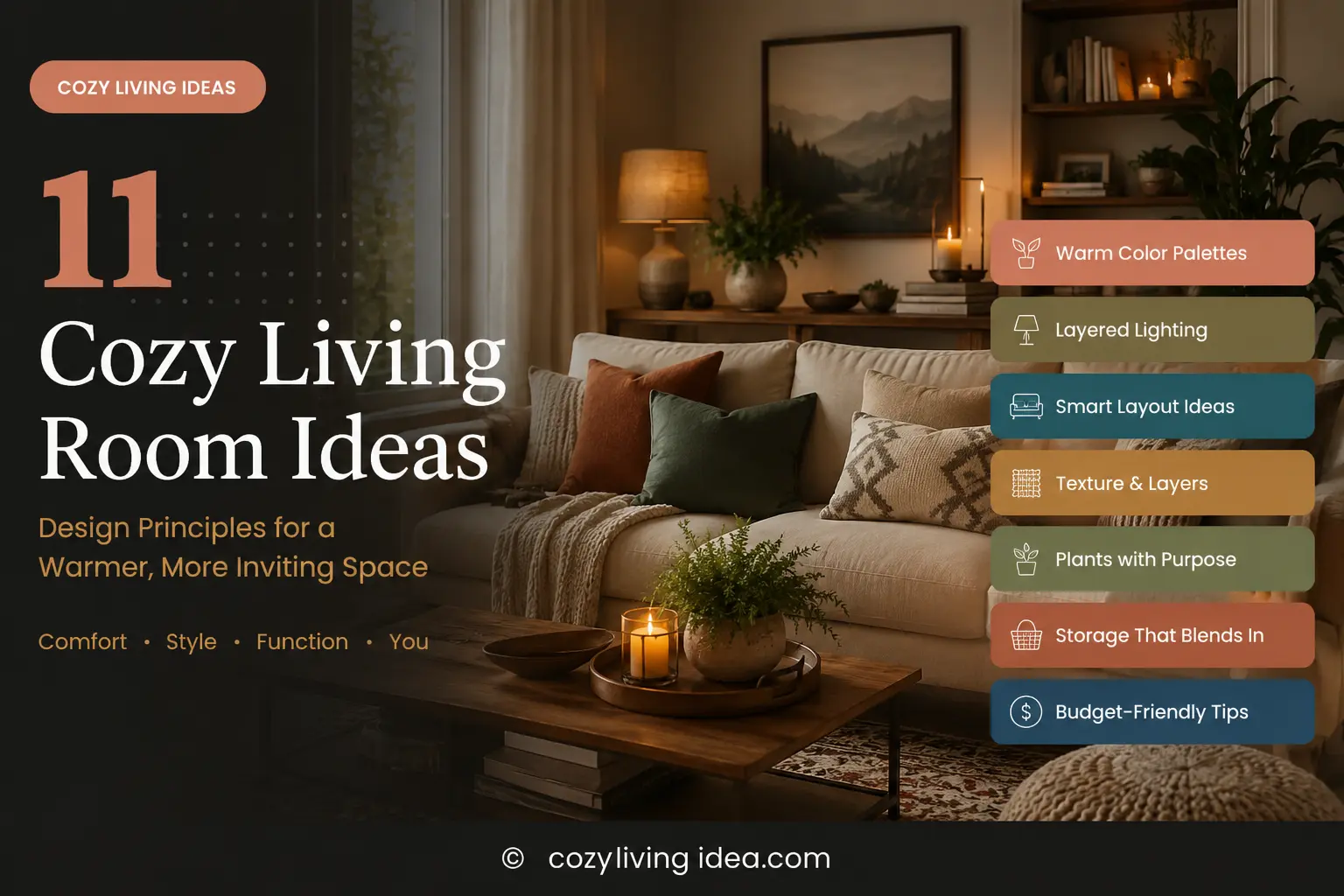
Cozy Living Room Ideas: 9 Expert Tips to Create a Warm, Inviting Space in 2026
A living room can have expensive furniture, a designer sofa, and a perfectly matched color scheme and still feel like a hotel lobby. Coziness isn’t about how much a room cost — it’s about a handful of specific, correctable decisions: how light lands in the space, how furniture is angled, and how many different textures the eye and hand encounter. Get those right and even a modest room feels like somewhere you want to spend an evening. Get them wrong and no amount of throw pillows will fix it.
This guide walks through the cozy living room ideas that actually move the needle, in the order they matter most, with the reasoning behind each one — so you know why a change works and can apply it to your own room instead of copying a photo.
Why “Cozy” Isn’t About Adding More
The all-white, everything-matching look that dominated the last decade photographed beautifully but lived coldly. People are moving away from it — not toward clutter, but toward rooms that feel considered: warm colors that flatter skin tones, textures that beg to be touched, lighting that skips the harsh overhead glare, and furniture arranged for connection instead of showroom symmetry.
The reassuring part is that none of this requires a renovation or a big budget. It requires knowing which four or five elements carry the most weight, and starting there instead of buying decor at random.
How to Make Your Living Room Cozy: Key Considerations
Before getting into individual techniques, it helps to hold the whole picture in your head at once. Every principle in this guide falls under one of five considerations — think of them as the checklist a designer runs through when walking into a new room for the first time.
- ✓
Warmth of color, not just choice of color The undertone matters more than the shade itself. A “gray” with a warm undertone reads completely differently from a “gray” with a cool one, even at the same lightness.
- ✓
Light as a design material, not an afterthought Where light comes from and what temperature it is changes a room more than any piece of furniture you could buy.
- ✓
Distance and orientation between seats Coziness is largely a social geometry problem — people feel more at ease when seating invites conversation rather than facing a screen in a row.
- ✓
Texture variety at hand heightAnything within arm’s reach of where people sit should offer some contrast in material, because that’s what gets touched, not just looked at.
- ✓
Evidence of a life being lived thereA stack of books mid-read, a blanket left folded over an arm, a plant that’s clearly been watered — these read as “inhabited,” and inhabited is what cozy actually means at its core.
A veteran home stager once said her first move in any listing was never to buy anything new — it was to turn off every overhead light and see what the room needed once it was lit properly. That’s a good habit to borrow: audit before you shop. Most living rooms don’t need more furniture. They need the furniture they already have to be lit, angled, and layered correctly.
1. Choose Cozy Living Room Colors That Do the Warming For You
Color is the fastest lever you can pull toward warm living room decor, because it affects every surface in the room before you’ve placed a single piece of furniture. Cool grays, stark whites, and icy blues fight against warmth no matter what you layer on top — they read as clinical because they reflect light with a blue cast, which our eyes associate with overcast daylight rather than firelight.
Anchor the room in warm neutrals instead: creamy whites (butter tones, not bleached ones), tawny beige, dusty taupe, soft linen. These bounce warm-spectrum light back into the room and create a sense of enclosure without making it feel dark.
From there, layer in one or two richer accent colors — deep navy, forest green, spice coral, or terracotta. A 60-30-10 split keeps this from feeling random: 60% dominant neutral (walls, the main sofa), 30% secondary tone (rugs, curtains, an armchair), 10% accent (pillows, art, small objects). A color only reads as intentional once it appears at least three times in a room — repeat your accent in a pillow, a throw, and one piece of art rather than using it once and hoping it lands.
Paint your swatch onto a large sheet of poster board rather than directly on the wall, and move it around the room at different times of day. A color that looks perfect at noon by the window can look entirely different in lamp light by the sofa at 8 p.m. — and lamp light is when you’ll actually be using the room most.
Two more practical checks: test paint swatches after dark, under your actual lamps, since daylight readings can be misleading once the sun goes down. And remember that your wood furniture — coffee table, shelving, frames — already contributes brown and amber tones to your palette, so account for it before buying more “warm” accessories.
2. Layer Textures So the Room Invites Touch
If color is what someone notices first, texture is what makes them want to sit down. A room can be warm-toned and still feel flat if every surface has the same finish. The fix is contrast: pair a smooth surface with a rough one. A sleek leather sofa gets a chunky-knit throw. A fluffy rug sits under a clean-lined wood coffee table. A velvet pillow sits next to a linen one.
A practical texture checklist, in rough order of impact:
- ✓
A plush area rug (wool, jute, or chunky weave) anchoring the seating area
- ✓
Throw blankets in at least two different materials — one chunky knit, one soft fleece or cashmere
- ✓
Mixed cushion covers: velvet, linen, woven cotton, boucle
- ✓
Heavier curtain fabric — linen, velvet, or cotton twill — that puddles slightly at the floor
- ✓
One natural-material piece: a wicker basket, rattan tray, or wooden bowl
- ✓
Woven art or macramé for texture that isn’t at eye level with the furniture
You don’t need every item on that list at once. Start with two or three, and prioritize the rug — a good area rug does more for a room’s cozy factor per dollar than almost any other single purchase, because it’s the largest single surface most people leave under-considered.
“Texture is what makes a photograph of a room different from the actual experience of sitting in it,” is how one textile designer once put it. Photos flatten texture almost completely, which is part of why rooms that look merely “fine” online can feel remarkably cozy in person, and vice versa.
If you want to stretch texture further without buying new, our guide to DIY home decor using recycled materials covers budget-friendly ways to add natural texture — think reclaimed wood trays, repurposed glass jars, and fabric scraps turned into pillow covers.
3. Master Layered Lighting (Your Highest-ROI Fix)
Of all the living room lighting ideas in this guide, this is the one with the fastest payoff — it costs less than a new piece of furniture and transforms a room faster than any other change. A single bright overhead fixture creates flat, shadowless light that washes out color and makes rooms look like waiting areas after dark. Cozy rooms instead use several smaller, warm-spectrum (2700K–3000K) light sources at different heights — which mimics how firelight and candlelight actually behave, in pools rather than a flat wash.
Four layers, in priority order:
If you have a dimmer, use it — the goal is barely-there background light, not full illumination. If you don’t, simply skip the overhead after dark.
Floor and table lamps positioned around seating create a “halo” of light exactly where people are sitting. This is where most of your lighting budget should go, and 2700K bulbs are the closest LED equivalent to candlelight.
A directional spot or picture light aimed at art or a bookshelf pulls the eye and adds a sense that the room was styled on purpose.
Candles — or a good flameless version — add a flicker that no electric source fully replicates. It’s a small detail, but it’s disproportionately calming.
Aim for at least three separate light sources turned on at any given evening moment, each at a different height — floor, table, and eye level. Lighting designers often call this “layering by elevation,” and it’s the reason hotel lobbies and restaurants rarely rely on a single ceiling fixture.
If you make only one change from this entire guide, make it this one: turn off the overhead light and turn on two table lamps instead. The difference is immediate.
4. Arrange Furniture for Conversation, Not Display
Getting your cozy living room layout right matters almost as much as lighting does, and the most common mistake is pushing every piece against the walls. It feels like it should make a room look bigger, but it actually creates what designers call a “ballroom effect” — open, but cold, because nothing is oriented toward anything else.
Pull the sofa 12–18 inches off the wall and use the gap for a console table. Angle accent chairs 30–45 degrees toward the sofa instead of squaring them off — this small adjustment reads as an invitation rather than a formal arrangement. Size the coffee table to roughly two-thirds the length of the sofa, sitting 12–18 inches from the seating edge: too small and it looks lost, too large and it blocks movement.
The rug should extend under the front legs of every seating piece in the group — this is what visually ties scattered furniture into one cohesive zone instead of a collection of individual pieces. And leave at least 36 inches of clearance for main walkways; cozy means enveloping, not obstructed.
5. Give the Room a Focal Point
Every cozy living room has something for the eye to settle on and the furniture to orient around. In older homes that’s usually a fireplace; elsewhere it might be a gallery wall, a large piece of art, or a well-styled bookshelf.
If you have a fireplace, style the mantle with a large mirror or art piece at center flanked by candles or small plants, and orient seating toward it even when it’s not lit. For a gallery wall, mix frame sizes and finishes rather than matching them — the slight imperfection is what reads as a real, lived-in collection rather than a showroom set.
As a sizing rule, keep art above a sofa to roughly two-thirds the sofa’s width, centered around 57–60 inches from the floor. A bookshelf focal point works the same way: mix books with objects — a stack, a plant, a candle — and try grouping spines loosely by color, which gives the eye a rhythm to follow rather than a wall of random spines.
6. Get the Rug Size Right
More rooms lose their cozy quality to an undersized rug than almost any other single decor mistake. A rug that only fits under the coffee table, with seating floating on bare floor around it, makes the whole room look unfinished — because the eye reads the bare floor as unresolved space.
The correct size has the front legs of every major seating piece resting on the rug. For a sofa-and-two-chairs arrangement, that typically means 9×12 feet or larger. If your budget is tight, prioritize size over material quality — a large plain rug does more for the room than a small expensive one.
Material matters too: wool is warm, durable, and naturally stain-resistant, making it the safest long-term choice. Jute and sisal add earthy texture but are better layered under a softer rug than used alone underfoot. Boucle and shag maximize tactile warmth, which is worth it in a room where people actually sit on the floor. A layered approach — a smaller decorative rug over a larger natural-fiber base — gets you visual richness for less than one large premium rug would cost.
When in doubt between two rug sizes, size up. A rug that’s slightly too large and runs a few inches under the console or side table reads as intentional. A rug that’s slightly too small and leaves a visible gap around the furniture reads as a mistake — there’s no in-between with rug sizing.
7. Bring in Plants, Placed With Intention
Plants add color, movement, and life in a way nothing else can, and they signal that a space is actively cared for — which is a large part of what “cozy” means at an emotional level. Fiddle leaf figs bring dramatic height to corners; pothos looks lush trailing from a high shelf; snake plants handle the dim corners other plants can’t; peace lilies bloom indoors and tolerate low light.
Think in three levels for the best visual effect: one large floor plant for height, a medium plant on a side table for the middle of the room, and something trailing or small on a shelf up high. That vertical spread reads as a space that’s grown into itself over time, rather than one that was staged in an afternoon.
Best Plants for a Cozy Living Room:
The classic cozy living room plant. Large, sculptural leaves bring dramatic height to corners. Needs bright indirect light and consistent watering.
Essentially indestructible and spectacularly cozy when allowed to trail from a high shelf. Adds the lush, cascading greenery that makes a room feel abundantly alive.
Architectural, striking, and near-impossible to kill. Works beautifully in dark corners where other plants struggle. Its upright form adds height without taking floor space.
Blooms indoors, tolerates low light, and air-purifies enthusiastically. The flowers add a soft, organic element that reads as genuinely warm and domestic.
8. Small Cozy Living Room Ideas That Actually Work
Small rooms have a real advantage: limited square footage is already intimate. The goal is to lean into that instead of fighting it with furniture that’s too small to matter.
Choose furniture with exposed legs — mid-century sofas, leggy armchairs — so light travels underneath and the room reads as more open, with the added effect of making ceilings appear taller. A large mirror opposite a window doubles the sense of natural light and can make a small room feel 30–40% larger. Go vertical with storage: floor-to-ceiling shelving draws the eye up and frees floor space, and you can reserve the eye-level shelves for the pieces you actually want seen.
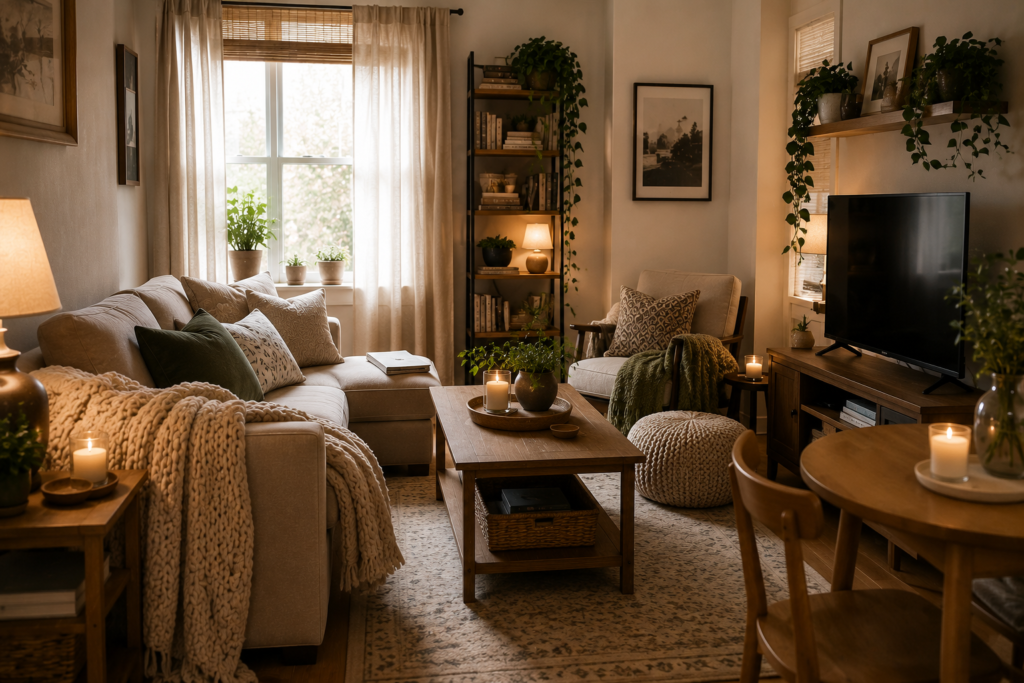
A properly scaled loveseat flanked by two chairs often creates a more dynamic, welcoming arrangement than one oversized sofa that dominates the room. And counterintuitively, deep warm colors — a navy accent wall, a terracotta chimney breast — can make a small room feel more expansive rather than smaller, because the contrast adds depth that flat, timid neutrals can’t. If floor space is at a premium, a wall-mounted electric fireplace adds the number-one cozy feature without taking up an inch of it.
If your living room shares square footage with a compact apartment layout, our guide to apartment bedroom decor ideas covers the same small-space principles applied to the bedroom.
9. Three Cozy Aesthetics to Borrow From
Cozy isn’t one look — it shows up differently depending on the aesthetic you’re drawn to.
Warm cottagecore leans on soft florals, mismatched antique furniture, layered vintage rugs, and abundant plants in a palette of cream, sage, dusty rose, and warm brown. It feels inherited rather than purchased.
Modern organic (Japandi-influenced) pairs low-slung furniture in pale oak or walnut with cream bouclé seating and wabi-sabi ceramics, kept to a palette of warm whites, sand, and charcoal. This style has fewer pieces overall, so the quality and finish of each one matters enormously.
Moody, jewel-toned rooms go the opposite direction: dark navy or forest-green walls, velvet sofas, brass hardware, and densely hung gallery walls. It’s the most enveloping of the three, but it requires real commitment to the palette and better-quality textiles to avoid looking heavy instead of rich.
5 Living Room Decorating Mistakes That Undo All This Work
Covered above, but worth repeating — a rug that doesn’t reach every seating piece fragments the room instead of anchoring it.
Relying on one ceiling fixture is the fastest way to flatten a room’s atmosphere; two table lamps and a dark ceiling fix it in minutes.
It looks tidy but creates distance instead of connection. Float the sofa and angle the chairs.
A living room where every piece was bought as a set looks like a showroom, not a home. Mix periods and materials on purpose.
A completely bare room reads as sterile, not calm. Cozy needs some layer of books, plants, and personal objects — the goal is intentional clutter, not zero clutter.
Final Thoughts
None of the principles above require you to redo the room all at once. If you take away one sequence to follow, make it this: fix the lighting first, since it costs the least and changes the most; add or resize the rug second, since it anchors everything else; then work on texture and furniture placement once those two foundations are in place. Color and focal points matter, but they’re easier to get right once the room is already lit and grounded properly.
The rooms that feel best to sit in for hours aren’t usually the ones that were finished in a weekend. They’re the ones that got a few key decisions right early — light, layout, scale — and then picked up texture and personality gradually. These cozy living room ideas work best tackled in that order rather than all at once, so give yourself permission to do the same with yours.
Once your living room feels right, the same warm-neutral, layered-lighting approach carries straight into the bedroom — see 15 fresh ways to style an apartment bedroom for the next room to tackle.
Frequently Asked Questions (FAQ)
Lighting. Swapping harsh overhead light for layered, warm-spectrum lamps and candles has more impact on how a room feels than any other single change — even in a sparsely furnished space. Texture is the second-highest-impact upgrade once lighting is sorted.
Warm neutrals with yellow undertones — creamy whites, soft beige, warm gray, tawny taupe — form the best base. Layer in warm accents like terracotta, amber, or forest green. Avoid cool-toned grays, stark whites, or icy blues as a dominant palette; they work against warmth regardless of what else is in the room.
Divide it into defined zones — a main seating area, a reading corner, a dining area — each anchored by its own rug. Don’t undersize furniture to compensate for the space; pieces that are too small make a large room feel emptier, not cozier. Dark accent walls and substantial curtains also help reduce the room’s visual volume.
A deep-seated sofa in soft upholstery — linen, velvet, bouclé, or cotton — with a seat depth of 21–24 inches so people can actually sit back. Sectionals work well in large rooms because they create natural enclosure; in small rooms, a well-proportioned loveseat often reads cozier than an oversized sofa.
Yes — the highest-impact changes are often the cheapest. Warm 2700K LED bulbs cost under $20 and change the ambiance immediately. A large secondhand rug, mixed-texture pillow covers, and a few good candles go a long way. Thrift and secondhand sources are also the best place to find the slightly worn, personality-rich pieces that make a room feel lived-in rather than newly furnished.