
12 Warm Minimalist Living Room Ideas That Feel Cozy, Not Cold
A warm minimalist living room is supposed to feel like a deep breath. Instead, a lot of them feel like a waiting room — clean, but a little stiff. Nothing’s wrong with the layout, exactly, and yet the room doesn’t invite anyone to sit down and stay a while.
That gap between “well-designed” and “actually comfortable” is almost never a taste problem. It’s usually a handful of fixable things: a palette that leans a shade too cool, one light source doing all the work after dark, or surfaces that are hard everywhere you’d want them soft. Warm minimalism is the fix — it keeps the restraint and the clean lines but adds back the comfort, natural material, and personal texture that got edited out along the way.
You don’t need to replace your sofa or fill every shelf with ceramic vases to get there. Most warm minimalist living rooms are built from the room you already have: the same furniture, a different palette relationship, and a few deliberate additions in the right order. That’s the approach this guide walks through — diagnose what’s making the room feel cold first, then work with your existing finishes instead of around them. If you want the broader picture beyond minimalism specifically, our cozy living room styling tips cover the same warmth-first thinking for any decor style, not just this one.
A living room reads as warm minimalist, not cold minimalist, when it combines a warm-toned neutral palette (cream, oat, greige — not stark white or icy gray), at least one large soft surface like a properly sized rug, visible natural material such as wood or woven texture, and light sources at more than one height in the room. Start with the palette and the rug, then layer in texture and lighting before buying any new decor.
What Makes a Living Room Warm Minimalist?
Warm minimalism sits in the middle of a few things that sound like opposites:
- ✓
Clear surfaces without complete emptiness. A coffee table with nothing on it doesn’t read as calm — it reads unfinished. A coffee table with one tray, one object, and open space around them reads intentional.
- ✓
Neutral colors without flat beige monotony. The whole room doesn’t need to be one shade of tan. It needs one dominant warm neutral and enough tonal contrast that the eye has somewhere to land.
- ✓
Clean furniture lines without sacrificing comfort. A sofa can have simple, straight silhouettes and still have deep, supportive cushions. Those aren’t in conflict.
- ✓
Natural materials without turning the room rustic. One well-chosen wood or stone piece adds warmth. A room full of reclaimed wood and exposed beams is a different style entirely.
- ✓
Personal objects without creating visual clutter. A shelf of books, one meaningful ceramic piece, or a plant you’ve had for years adds warmth that a stack of matching decorative objects from the same store never will.
If you’re not sure whether a room reads as “minimal” or “empty,” ask whether it looks intentional in a photo but usable in real life. If it only works for the photo, it’s empty, not minimal.

Warm Minimalism vs. Organic Modern
The two get confused constantly because they share a warm, neutral palette. The difference is where each one starts. Warm minimalism starts from restraint — clean lines, function first, visual calm — and adds warmth on top. Organic modern starts from nature itself, leaning harder into sculptural, curved forms and raw, textural materials as the main event rather than an accent. A warm minimalist room can borrow a curved chair from organic modern without adopting the whole aesthetic.
Warm Minimalism vs. Japandi
Japandi is warm minimalism’s closest cousin, but it’s more specific. It pulls directly from Japanese and Scandinavian design traditions — think low furniture, natural wood joinery, and a particular kind of quiet, almost ceremonial simplicity. Warm minimalism is looser. It borrows the same warm-neutral, natural-material instinct but works with a much wider range of architectural styles and furniture periods, from mid-century to contemporary to a builder-grade rental.
Build a Warm Palette Around What You Already Own
Most guides tell you to pick a moodboard first. That only works if you’re starting from a truly blank room, which almost nobody is. Start with what’s already fixed in place instead.
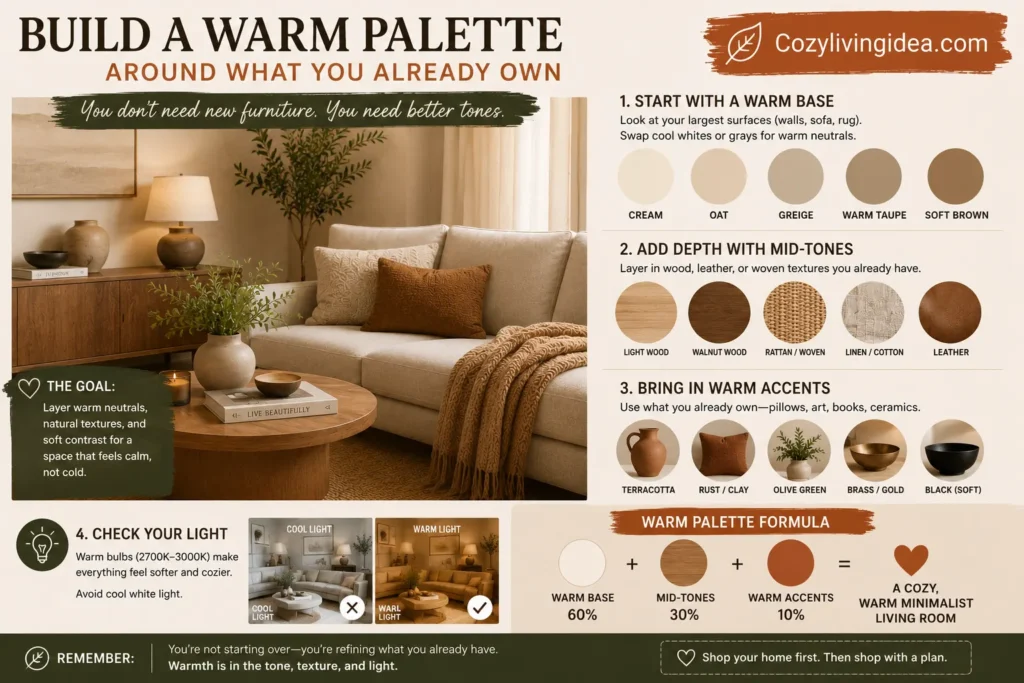
Identify the Undertones of Your Fixed Finishes
Walk through the room and note the undertone of everything you can’t easily change:
- ✓
Flooring
- ✓
Sofa upholstery
- ✓
Wall paint
- ✓
Any stone or tile
- ✓
Large wooden furniture
- ✓
The direction and quality of your natural daylight
Any new color you bring in — paint, textiles, art — should connect to at least one of these. This is the step that keeps a warm minimalist refresh from feeling like a mismatched patch job.
Use the 70–20–10 Warm Color Formula
This ratio keeps a warm palette from tipping into either flat beige or busy clutter:
- ✓
70% foundation: warm white, cream, oatmeal, greige, or soft taupe across your largest surfaces — walls, sofa, rug base.
- ✓
20% supporting tone: wood, camel, chocolate, clay, or muted olive on furniture, curtains, or a secondary textile.
- ✓
10% contrast: charcoal, aged brass, rust, or deep brown in small, deliberate doses — a lamp base, picture frames, a throw pillow.
If a room already feels flat and beige, you’re almost always missing the 10% contrast layer, not the 70% foundation. Add one darker or metallic accent before adding more neutral pieces.
4 Reliable Warm Minimalist Palettes
Cream, Oak and Camel — best for bright rooms with pale flooring. Keeps everything light while wood and camel textiles add depth.
Warm White, Walnut and Olive — a stronger natural contrast without going dark. Works well in rooms that get good daylight but want more visual weight than an all-cream scheme.
Oatmeal, Terracotta and Aged Brass — adds a controlled hit of color to an otherwise neutral room, useful if you want warm minimalism to feel a little less monochrome.
Greige, Chocolate Brown and Linen — the best fit if your room already has gray or black in it — a TV, gray sofa, black hardware — since it builds warmth around those tones instead of fighting them.
12 Warm Minimalist Living Room Ideas in 2026
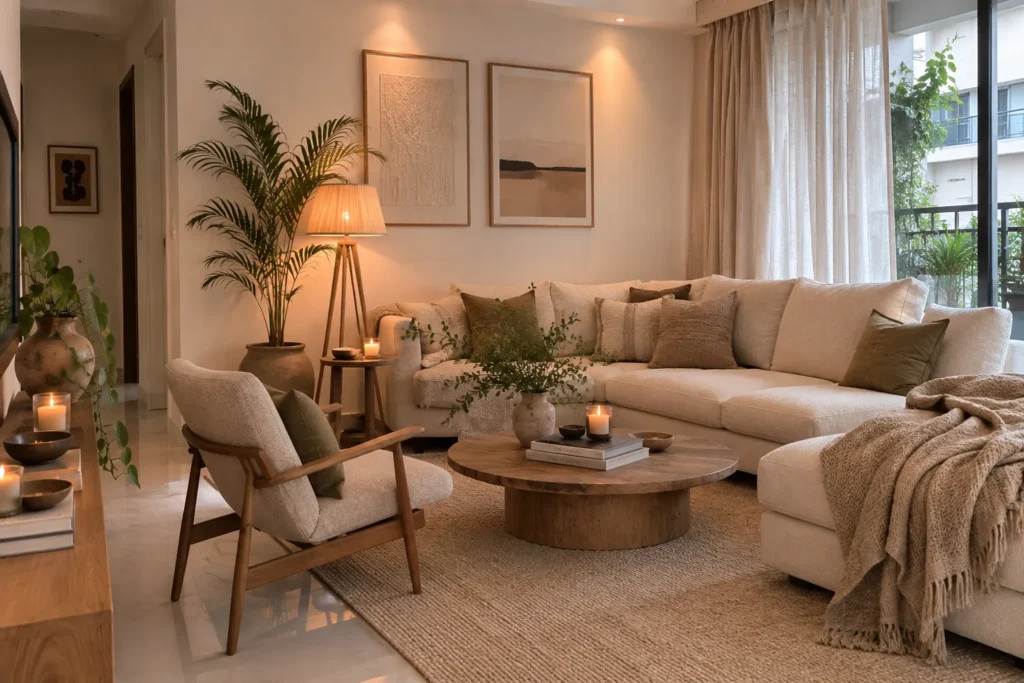
1. Replace Stark White with a Warmer Foundation
You don’t have to repaint the whole room to shift its temperature. Curtains, a rug, or new upholstery in a warm off-white can soften a cool-white wall almost as effectively as paint — and it’s a smaller commitment if you’re renting or not ready to fully repaint. If you do repaint, look for a white with a yellow or red undertone rather than a blue one; it’s the difference between “warm white” and “clinical white” on the same wall.
2. Anchor the Seating Area with One Properly Scaled Rug
A rug that’s too small is one of the most common reasons a minimalist living room feels disconnected rather than calm. As a general rule, aim for at least the front legs of every seating piece to land on the rug — an 8′ x 10′ rug fits most standard living rooms, and a 6′ x 9′ works for smaller apartment layouts. If your room has an unusual footprint — narrow, open-plan, or a tricky doorway — it’s worth measuring the space properly before you buy; our living room layout guide for different room shapes breaks down sizing for ten common apartment shapes.
Apartment Therapy’s rug-buying guide is also a solid gut check if you’re torn between two sizes. A properly sized rug does two jobs at once: it visually ties the furniture together into one grouping, and it softens hard flooring, which does more to warm up a room than almost any other single change.
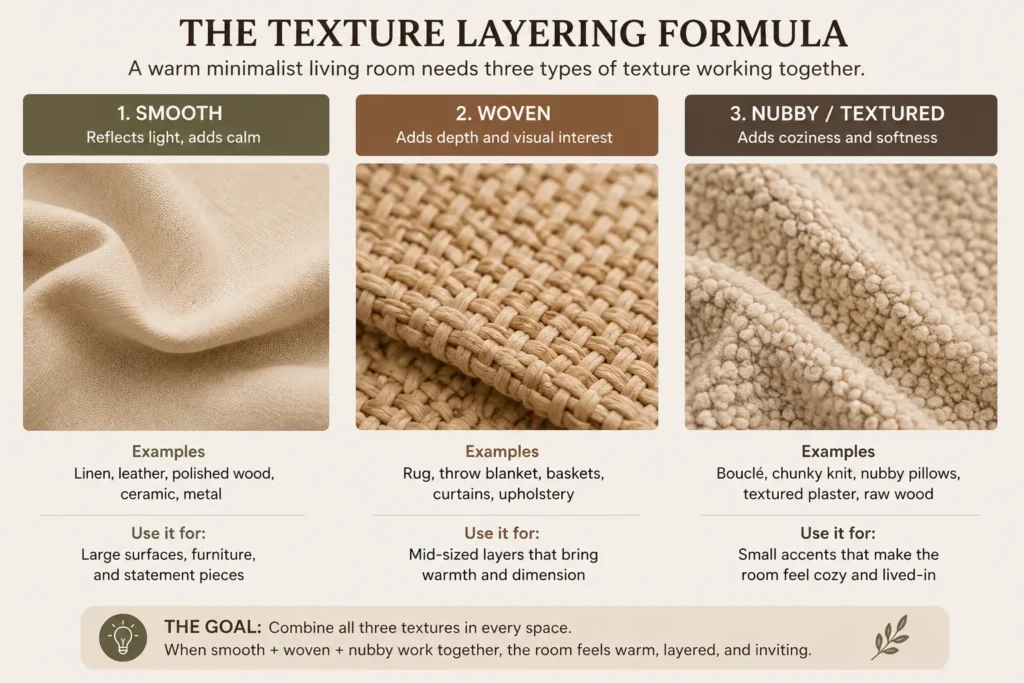
3. Layer Three Different Types of Texture
Texture is what separates “warm” from “flat,” even within the same color family. Use a simple formula in every seating area: one smooth material, one woven material, and one soft or nubby material — for example, a smooth wood coffee table, a woven jute or rattan basket, and a nubby wool throw.
3 textures is enough to feel layered without tipping into visual clutter. This is also the easiest place to rotate the room seasonally — swapping a throw or a few textiles is basically what our cozy fall living room refresh is built around, and the same swap-don’t-overhaul approach works for a warm minimalist room year-round.
4. Introduce Wood Through Functional Furniture
Wood warms up a room fast, but the way you introduce it matters. A coffee table, media console, sideboard, open shelving unit, or a single wood-framed accent chair does more for the room than a handful of small wooden ornaments scattered around, because it reads as a real design decision rather than an afterthought purchase.
5. Choose Comfortable Furniture with Clean Lines
Clean lines and comfort aren’t opposites — the mistake is choosing furniture that’s slim purely because it photographs well. Prioritize supportive cushions, a seat depth you can actually curl up in, upholstery that holds up to daily use, and slightly softened edges instead of sharp ones. A sofa can be simple in silhouette and still be the most comfortable seat in the house.
6. Add One or Two Curved Forms
Most rooms have plenty of straight lines already — walls, windows, straight-sided furniture. One or two curved pieces, like a rounded coffee table, a curved accent chair, an arched floor lamp, or a circular side table, break that up just enough to soften the whole room without turning it into a different style.
7. Light the Room at 3 Different Heights
This is one of the highest-impact, lowest-cost changes on this list. Combine an overhead or ambient source, a floor or task lamp, and a lower table or console lamp. When light comes from multiple heights instead of just the ceiling, the room reads as layered and calm in the evening instead of flat and over-lit.
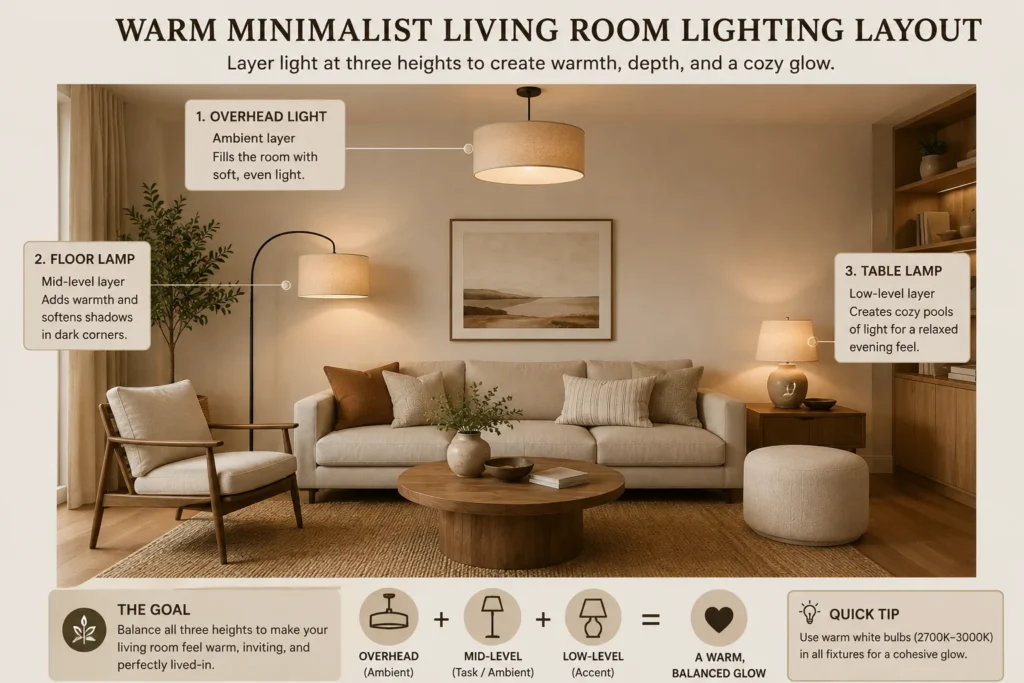
Warm-toned bulbs (look for a color temperature around 2700K, labeled “warm white” or “soft white” on the packaging) make a noticeable difference over daylight-toned bulbs in a space that’s meant to feel cozy.
8. Soften Windows with Full-Length Curtains
Bare windows are one of the hard surfaces from the earlier audit. Simple cotton, linen-look, or lightly textured curtains that connect with your wall color add softness, help with sound, and make the room look more finished — even a plain curtain rod and panel set does this. Hang the rod slightly above and outside the window frame to make the window (and the ceiling) look taller.
9. Hide Daily Clutter Instead of Removing Useful Objects
Minimalism doesn’t mean owning less of what you actually use — it means keeping what you use out of sight when it’s not in use. Closed media storage, drawers, lidded baskets, and simple cable management let the room stay functional for daily life (remotes, chargers, mail) without all of it being visible all the time.
10. Replace Several Small Decorations with One Strong Piece
A shelf with six small matching objects reads as generic. One oversized piece of art, a substantial ceramic vessel, a sculptural lamp, or a meaningful vintage find does more visual and emotional work than a dozen small decorative items, and it’s usually a better use of a limited decor budget too.
This applies to seasonal decorating as well — the difference between a room that looks tastefully seasonal and one that looks cluttered usually comes down to the same one-strong-piece thinking; our aesthetic Halloween decor ideas lean on exactly this approach if you want to see it applied to a specific season.
11. Keep Surfaces Edited, Not Empty
Use a simple formula on any open surface — a coffee table, console, or shelf: one functional object (a tray, a bowl), one tactile object (something textured you’d actually want to touch), one personal or natural element (a plant, a found object, a book you love), and plenty of surface still showing. That last part matters as much as the objects themselves.
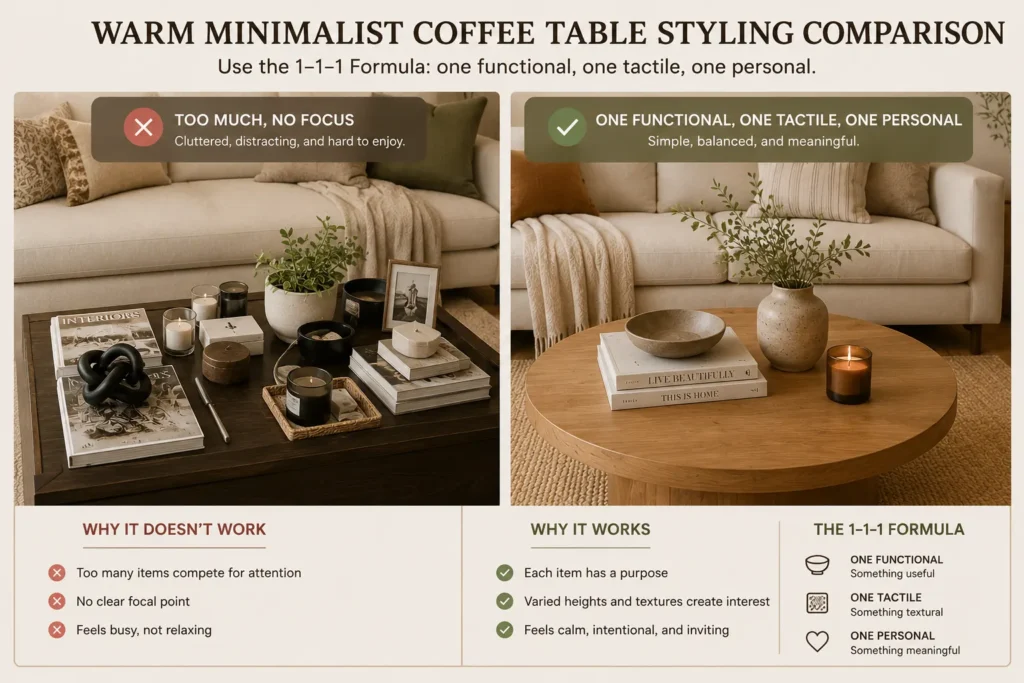
12. Add Life with One Deliberate Natural Element
Skip the windowsill full of small plants and choose one substantial living element instead — a large plant, a sculptural branch arrangement, a bowl of seasonal fruit, or a handmade natural object. One larger piece reads as considered. Several small ones read as an afterthought, even when each one individually is nice.
How to Warm Up Difficult Existing Features
This is usually the part every other guide skips — what to do when the “problem” in your room isn’t something you’re ready to replace.
Warm Minimalism with a Gray Sofa
A gray sofa isn’t automatically cold — it depends on its undertone. First, figure out whether your gray leans warm (a hint of brown or green in it) or cool (a hint of blue or purple). Either way, bridge it into a warm scheme with a rug that contains both gray and warmer earth tones, then bring cream, camel, walnut, or a muted olive into the pieces near it — a throw, a side table, curtains. Resist the urge to cover the whole sofa in beige cushions; a couple of well-chosen textiles do more than a dozen mismatched ones.
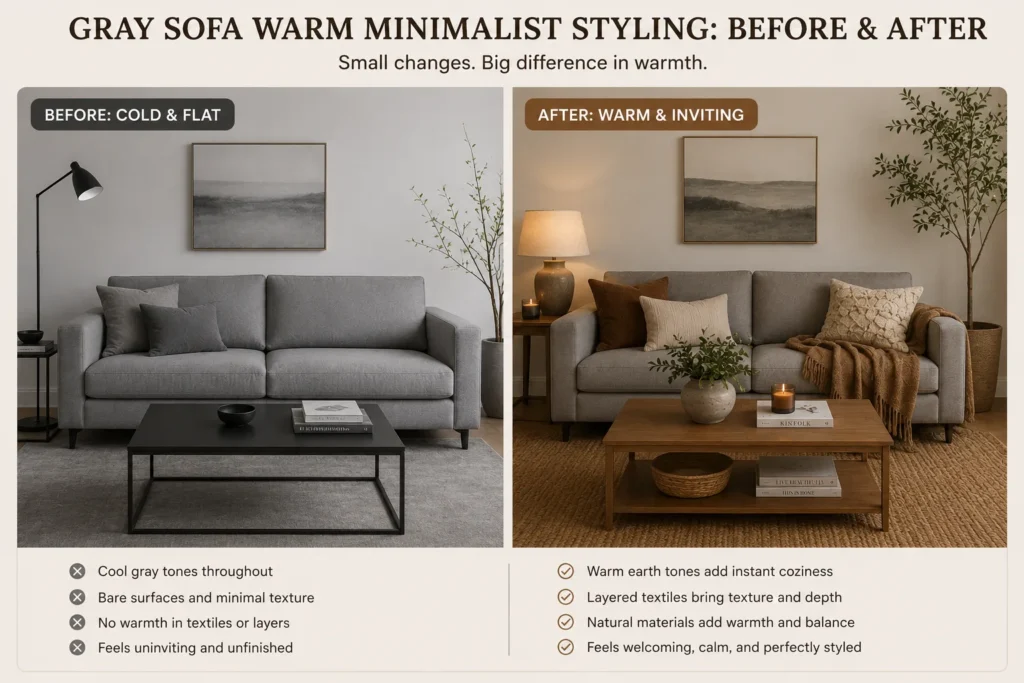
Warm Minimalism with Cool Gray Flooring
You can warm up cool flooring without replacing it. Cover a larger portion of the floor with a warm, textured rug so the flooring reads as a border rather than the dominant surface. Repeat warm wood tones above floor level — furniture legs, a console, a coffee table — so the eye has warmth at more than one level of the room.
Curtains and upholstered furniture also help by reducing how much of the room’s total visual weight the flooring carries. What to avoid: pairing cool gray flooring with stark white walls and glossy black furniture — that combination amplifies the coolness instead of balancing it.
Warm Minimalism Around a Black Television
A black rectangle on the wall is one of the hardest things to make feel warm, but it doesn’t have to fight the rest of the room. Place it above or beside a warm wood media console rather than mounting it on bare wall.
Get cables and devices out of view. Add one or two other darker accents elsewhere in the room — a lamp base, a picture frame — so the TV doesn’t read as the only dark object in an otherwise all-light space. Keep the wall around it relatively quiet; a crowded gallery wall competes with the TV instead of balancing it.
Warm Minimalism with Matching Furniture Sets
A matched three-piece set (sofa, loveseat, armchair, all identical) is efficient but can look showroom-flat. Keep whichever pieces you genuinely use, and remove one matching item you don’t need for daily seating. Then introduce a different material, shape, or era through the coffee table, an accent chair, a lamp, or a side table — that one intentional mismatch is usually enough to break the “matching set” look without buying a whole new living room.
Warm Minimalism in a Beige Rental
Rental-beige walls and carpet are a fixed finish, not a design failure — work with them instead of fighting them. A large rug still defines the seating area even over beige carpet. Full-length curtains hung with damage-free tension rods or removable hooks add softness without violating a lease. Leaning oversized art against the wall instead of drilling gets you the same visual impact.
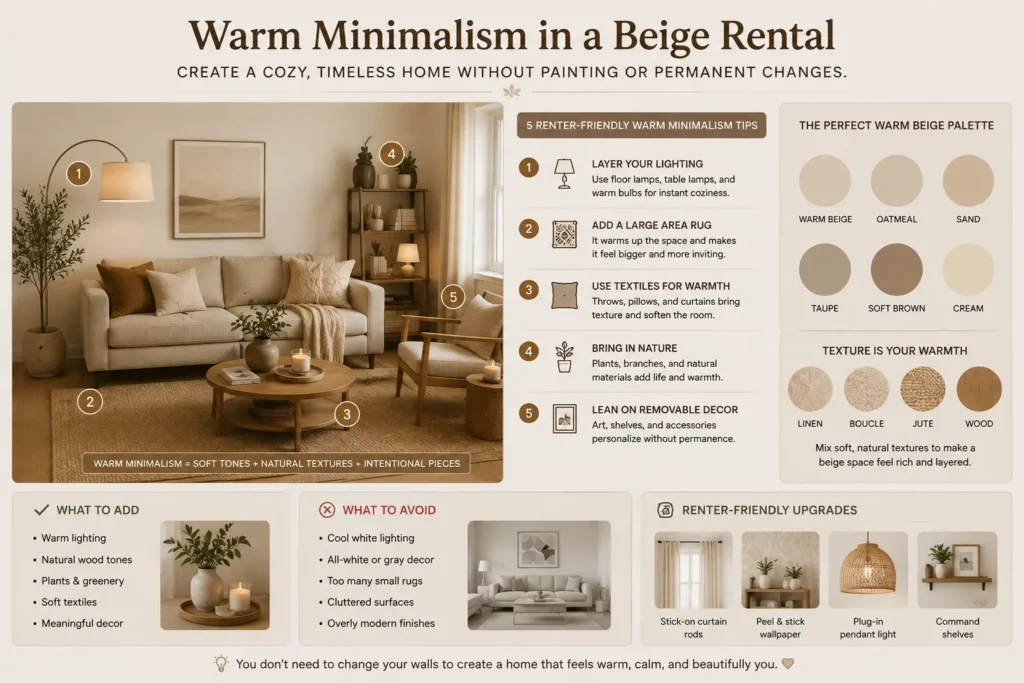
Portable floor and table lamps and a piece of closed storage finish the room. If your decor budget is tight on top of the rental restrictions, our budget-friendly dollar store decor roundup covers how to make inexpensive pieces look intentional instead of cheap — useful here, since spending on a lot of small rental accessories is usually the wrong move; the large, portable pieces do more per dollar and move with you when the lease ends.
The Small Warm Minimalist Living Room Formula
Small rooms need fewer decisions, not more careful ones. Use this as a checklist:
- ✓
One appropriately scaled sofa
- ✓
One lightweight accent chair, only if space genuinely allows it
- ✓
One large rug
- ✓
One compact coffee table
- ✓
One closed storage unit
- ✓
One statement lamp
- ✓
One oversized artwork or focal object
Several tiny furniture pieces make a small room feel more fragmented, not more spacious — a common instinct is to buy smaller versions of everything to “fit,” but that usually adds more visual stopping points for the eye. A few appropriately sized pieces, with breathing room between them, reads larger than a room full of small furniture crammed in.
Warm Minimalism for Real Life
For Homes with Children
Washable slipcovers or performance fabric, furniture with rounded rather than sharp edges, concealed toy storage, and fewer fragile objects within reach of small hands let the room stay warm minimalist without becoming a source of daily stress. The goal is a room that still looks like your taste, just built to survive being lived in.
For Homes with Pets
Tightly woven upholstery resists snagging and shedding better than loose weaves. Washable or low-pile rugs handle accidents and muddy paws more forgivingly. Sturdy side tables (not anything that tips easily) and a dedicated storage spot for leashes, toys, and pet supplies keep the room functional without pet gear taking over every surface.
For People Who Use the Living Room Daily
Design around how the room actually gets used: TV viewing, conversation, reading, charging devices, a spot for drinks, somewhere for blankets to live when they’re not on the sofa. A warm minimalist room that only works for a photo and not for a Tuesday night isn’t actually minimalist — it’s just underfurnished.
What to Upgrade First on a Limited Budget
If you can’t do everything at once, this order gets you the most visible change per dollar spent.

Step 1: Fix the Lighting
Add one floor or table lamp with a warm bulb before changing anything decorative. Lighting affects how every other choice in the room reads, so it’s the cheapest change with the biggest visual payoff.
Step 2: Correct the Rug and Window Treatments
Large soft surfaces transform a room’s overall feel more than several small accessories ever will. If you can only afford one, prioritize the rug — it affects the whole floor plan.
Step 3: Control Visible Clutter
Improve the media console, manage cables, and add a couple of lidded baskets or a piece of closed storage. This step costs little but changes how “finished” the whole room looks.
Step 4: Introduce One Warm Functional Material
Add a wooden coffee table, a textured accent chair, or a natural-fiber piece like a jute pouf. This is where the room starts to pick up its warm minimalist character.
Step 5: Add the Final Decorative Layer
Finish with art, ceramics, books, or one meaningful vintage object — decor is the last 10%, not the first move, and it reads better once the bones of the room are already warm.
Common Warm Minimalist Living Room Mistakes
- ✓
One appropriately scaled sofa
- ✓
One lightweight accent chair, only if space genuinely allows it
- ✓
One large rug
- ✓
One compact coffee table
- ✓
One closed storage unit
- ✓
One statement lamp
- ✓
One oversized artwork or focal object
Final Thought
Before buying anything new, diagnose what’s actually making the room feel cold — it’s almost always the palette’s undertone, a lack of texture, or single-source lighting, not a lack of furniture. Build your palette around the finishes you already have rather than starting from a blank moodboard.
Add warmth through the large moves first — rug, lighting, functional wood furniture — before layering in decor. And keep the whole thing in service of how the room actually gets used every day. A warm minimalist living room isn’t an empty room designed for a photo. It’s an edited, comfortable one designed for a Tuesday night.
Frequently Asked Questions (FAQ)
Yes. Identify whether your gray leans warm or cool, then bridge it with a rug that mixes gray and earth tones and bring in cream, camel, or walnut through nearby pieces rather than replacing the sofa.
Cover more of the floor with a warm, textured rug, repeat warm wood tones above floor level in your furniture, and avoid pairing the flooring with stark white walls and glossy black pieces, which amplifies the coolness.
Enough to be comfortable and add one layer of texture — typically two to four, in a mix of solid and lightly textured fabrics, rather than covering the sofa in matching beige cushions.
Lean on large, portable pieces — a rug, tension-rod curtains, leaning art, portable lamps, and closed storage — rather than paint or anything requiring drilling.
Anchor it with a warm wood media console, hide the cables, and keep the surrounding wall relatively quiet instead of building a crowded gallery wall around it.
Yes, with a few material swaps: washable or performance upholstery, rounded furniture edges, low-pile or washable rugs, and concealed storage for toys and pet supplies.