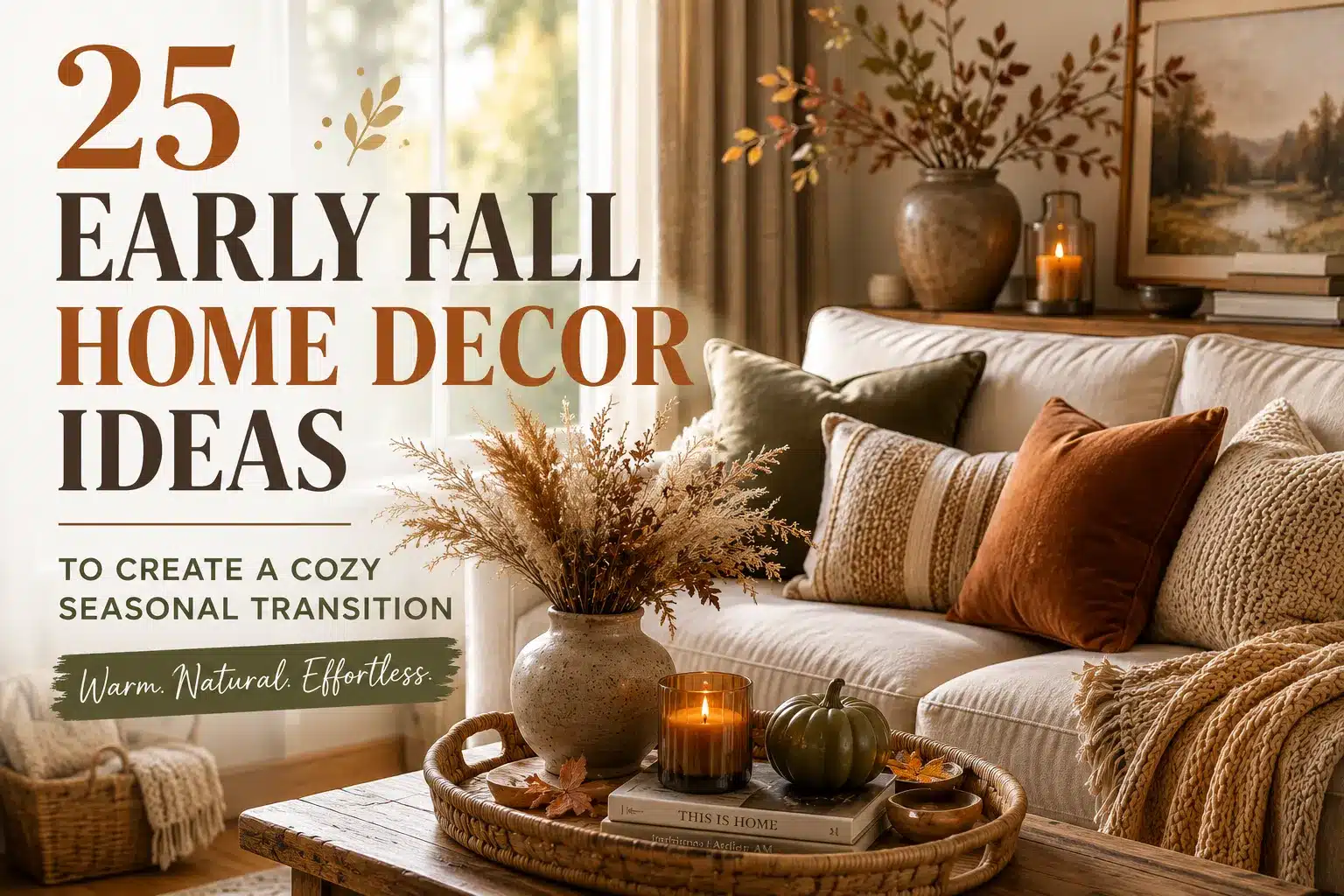
25 Early Fall Home Decor Ideas for a Cozy Seasonal Transition (2026)
There’s a specific window every year — late August into September — when summer hasn’t quite let go but you’re already craving something warmer. This is early fall home decor, and it’s a different exercise than the pumpkin-and-plaid version most people picture when they hear “fall decorating.”
Early fall home decor ideas center on texture, tone, and the temperature of light more than they do on seasonal props. Traditional autumn decor leans on literal signifiers — pumpkins, harvest motifs, orange everywhere. Early fall decor works with what you already own.
You’re not redecorating; you’re recalibrating. A few swapped textiles, a shift in color temperature, and a bit of natural material can carry a room from “summer bright” to “cozy fall home decor” without a single trip to the seasonal aisle.
If you’re working with a small apartment rather than a full house, many of the same principles apply at a smaller scale — our guide to apartment bedroom decor ideas covers how to layer texture and warmth in rooms where every square foot has to earn its place, which is exactly the mindset early fall decorating rewards.
This guide covers what early fall decor actually means, a five-step formula for making the shift, 25 room-by-room ideas explained in full, the color palettes that read as “early fall” without tipping into Halloween territory, this year’s decorating trends, a full weekend plan, and answers to the questions people ask most often when the season starts to turn.
What Is Early Fall Home Decor?
Early Fall vs. Traditional Fall Decor
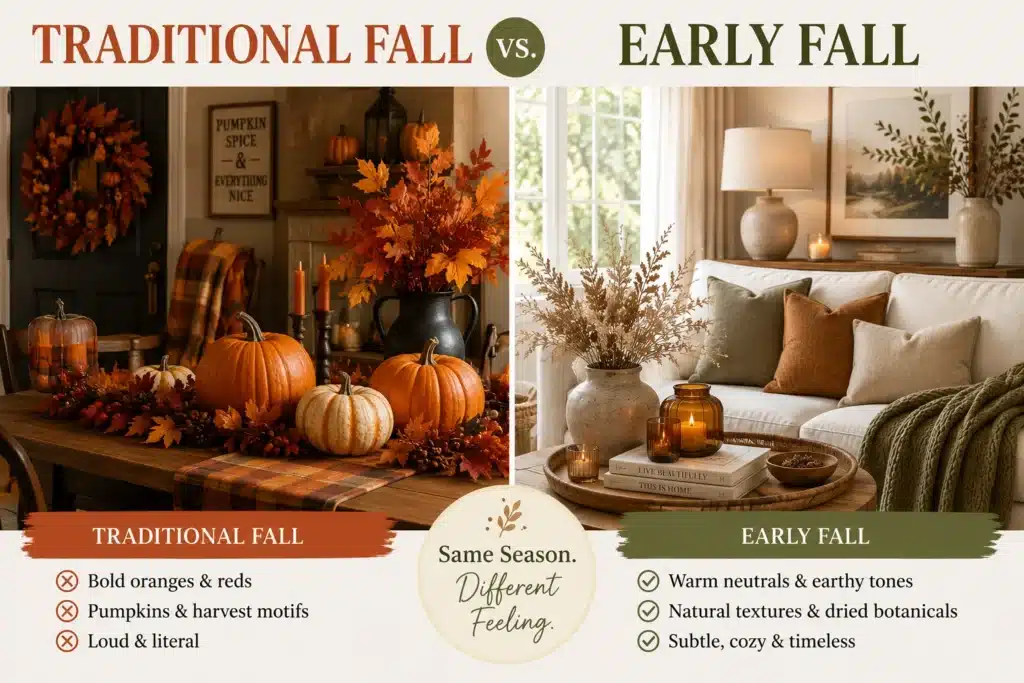
Traditional fall decor is harvest-coded: pumpkins on the porch, corn stalks by the door, deep orange and burgundy stacked on every surface. It’s decor that announces October loudly, and it looks best once the leaves have actually turned and the air has genuinely cooled.
Early fall decor is quieter. It borrows fall’s warmth — amber, rust, olive, warm neutral — without borrowing its costume-party literalism. Think of it as the decorating equivalent of a lightweight sweater over a summer dress: same base, different layer. This is also the version of fall decorating most design-forward homes are leaning into for 2026, where a rich, collected, more personal feel is replacing the loud, uniform “harvest display” look of years past.
When Should You Start Decorating for Early Fall?
Late August through mid-September is the sweet spot. Daylight is already shifting warmer and lower in the sky, which changes how color reads indoors — a soft rust throw that looked heavy under July’s midday sun will look exactly right by the second week of September.
Waiting until October to make any seasonal adjustment means your home lags behind what you’re already feeling outside, and you end up compressing two seasons of decorating into a few rushed weekends.
The Goal: A Cozy Transition, Not a Halloween Makeover
The test for whether something belongs in early fall decorating: does it still make sense sitting next to your summer furniture and art? A dried wheat wreath does. A plastic skeleton does not. If a piece only works once the calendar says “spooky season,” set it aside for October — early fall decor should feel like a natural extension of your home, not a costume change.
The Early Fall Decorating Formula
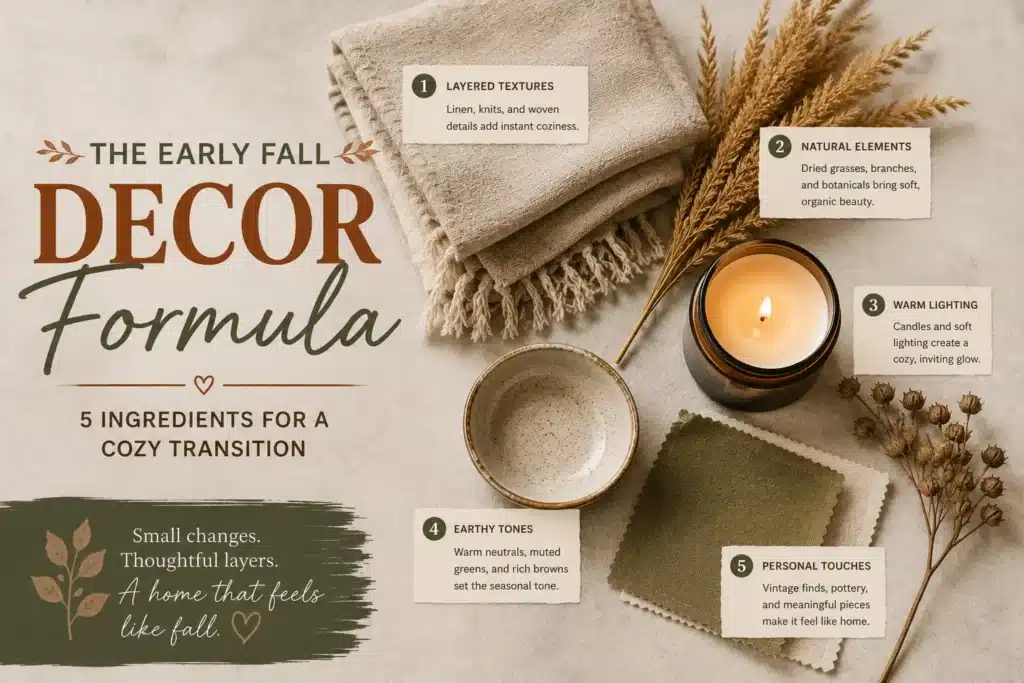
Step 1: Keep Your Summer Foundation
Don’t strip a room down to start over. Your sofa, your art, your rugs all stay exactly where they are. Early fall decorating works in layers on top of an existing foundation, which is exactly why it’s faster and far less expensive than a full seasonal redecorate — you’re editing, not rebuilding.
Step 2: Introduce Warmer Earth Tones
Color temperature does more work here than any single object. Swapping cool blues and crisp whites for warm neutral, terracotta, and olive shifts a room’s mood even when the furniture hasn’t moved an inch. This is basic color psychology: warm tones read as grounded and inviting, which is exactly the emotional note early fall decorating is reaching for. If you’re not ready to commit to bold color changes, start with one accent — a vase, a throw, a stack of books — and build from there.
Step 3: Layer Natural Textures
Linen, wood, wool, rattan, unglazed ceramic — these materials carry visual weight that flat, glossy summer surfaces don’t. Texture is what separates a room that looks “cozy” from a room that just looks “beige.” Layering two or three textures at once (a nubby throw over a smooth linen sofa, a rough ceramic vase on a polished wood table) is what creates real depth instead of a flat color swap.
Step 4: Add Soft Ambient Lighting
As daylight hours shrink, artificial light does more of the emotional lifting. Swap bright, cool-toned bulbs for warmer color temperatures (look for bulbs in the 2700K–3000K range), and lean on layered lighting — a table lamp here, a cluster of candles there — instead of one overhead source. A room lit only from above always feels more clinical than one lit from several lower points at different heights.
Step 5: Bring Nature Indoors
Dried branches, seeded grasses, a bowl of seasonal fruit — these connect the interior to what’s actually happening outside. They also cost little to nothing if you’re willing to walk your own yard or a nearby trail, which makes this the easiest step to execute on a Sunday afternoon with zero budget.
Think “late August through September,” not “October harvest.” If a decorating choice only makes sense once pumpkins are in season, it’s traditional fall decor, not early fall decor — save it for next month.
25 Beautiful Early Fall Home Decor Ideas
If your living room needs more of a full refresh rather than a seasonal layer, our cozy living room ideas guide walks through expert tips for building warmth into the space long-term — pair it with the seasonal swaps below for a room that feels both current and cozy year-round.
Living Room Decor Ideas
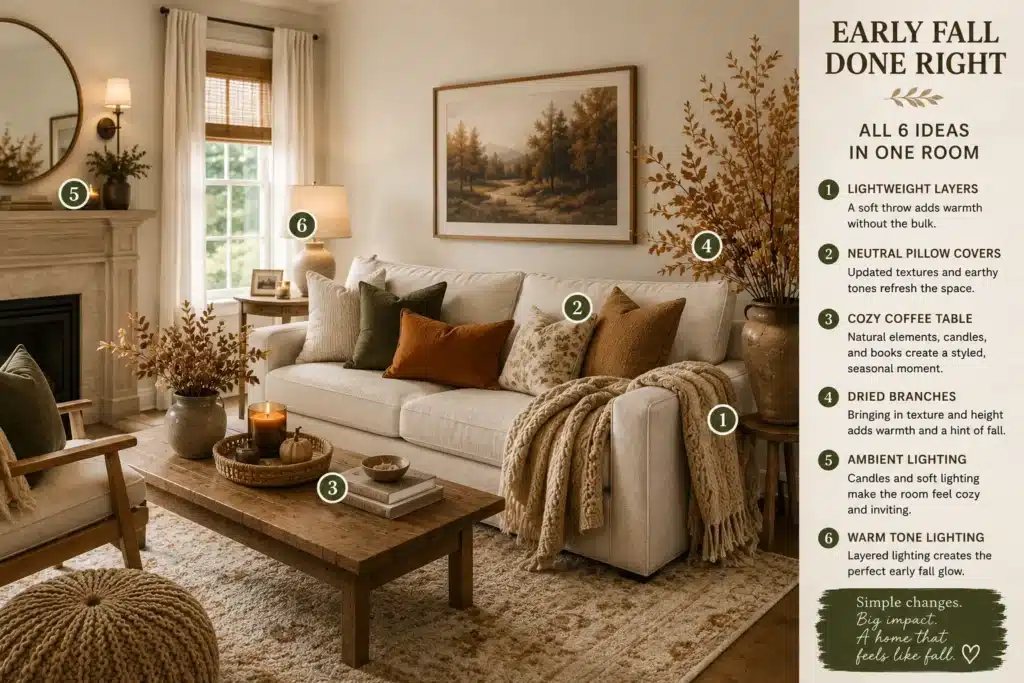
1. Swap Bright Summer Pillow Covers for Warm Neutrals Pillow covers are the single cheapest, fastest seasonal update in a home because you’re not buying new pillow forms — just the covers. Move from citrus and aqua tones toward rust, oatmeal, and clay. This one swap changes a sofa’s entire temperature in under ten minutes, and covers store flat, so last year’s bright set is easy to bring back next summer.
2. Layer Lightweight Throws Instead of Heavy Blankets Early September isn’t sweater-weather everywhere yet, so reach for a mid-weight cotton or linen throw rather than heavy wool. It signals the season without making a room feel stuffy on a warm afternoon, and it’s a throw you’ll actually reach for — heavy wool blankets tend to sit unused until temperatures really drop.
3. Style Your Coffee Table with Amber Glass and Natural Wood Amber and smoked glass catch low autumn light in a way clear glass doesn’t — the color itself reads warm even before you factor in what’s inside it. Pair a glass vessel with an unfinished wood tray or bowl for contrast between reflective and matte surfaces; that contrast is what keeps a simple tabletop styling from looking flat.
4. Replace Tropical Greenery with Dried Branches and Grasses Palm-leaf arrangements and bright florals read as summer. Dried pampas grass, seeded eucalyptus, or bare branches read as the season turning. It’s also decor that doesn’t wilt, which means no maintenance for months and no watering schedule to keep track of.
5. Add Soft Candlelight Without Overdoing Seasonal Decor A cluster of unscented or lightly warm-scented candles (think sandalwood or cedar rather than pumpkin spice) at varying heights does more for ambiance than a single large candle. Vary the heights across a tray or mantel — it reads more intentional than a flat row, and it gives the eye somewhere to travel.
6. Refresh Open Shelves with Earth-Tone Ceramics If your open shelving currently holds bright summer pottery or beach-trip souvenirs, rotate in stoneware and unglazed ceramics in warm neutral tones. Shelf styling is one of the lowest-cost ways to shift a room’s palette because you’re rearranging what you already own rather than buying anything new.
Home Entryway Decor Ideas
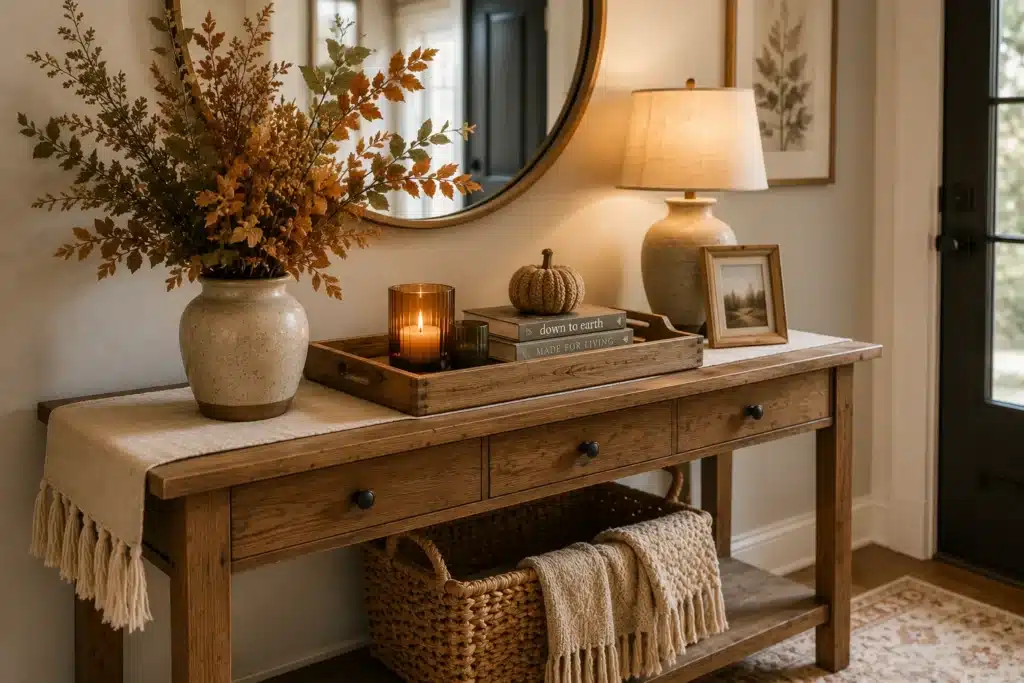
7. Create a Warm Console Table Using Wood, Linen, and Greenery The entryway sets expectations for the rest of the house. A console styled with a wood tray, a linen runner, and a small vase of dried greenery signals “cozy” before a guest has even reached the living room — first impressions in a home work the same way they do anywhere else.
8. Hang a Neutral Wreath Made from Dried Leaves or Wheat A wreath doesn’t have to mean pumpkins or plaid ribbon. Dried wheat, eucalyptus, or preserved leaves in muted tones works from late summer through Thanksgiving without ever looking dated, which means you style it once and let it carry the whole season.
9. Add a Basket for Cozy Blankets and Everyday Essentials This is function dressed as decor: a woven basket by the door holding a spare throw or a rotation of shoes does double duty, and the material itself (rattan, seagrass) is on-trend for the season while solving a real everyday clutter problem.
Kitchen & Dining Room Decor Ideas
For a broader look at how professional designers approach warmth and function together in this room, our contemporary kitchen design ideas guide breaks down the principles behind a kitchen that stays sleek and current well beyond one season.
10. Style Wooden Cutting Boards as Everyday Decor Leaning a large wood cutting board against the backsplash or standing it upright near the stove adds warmth to a kitchen that’s otherwise dominated by cool countertop and appliance surfaces — and it’s decor you were probably already storing in a drawer, so it costs nothing.
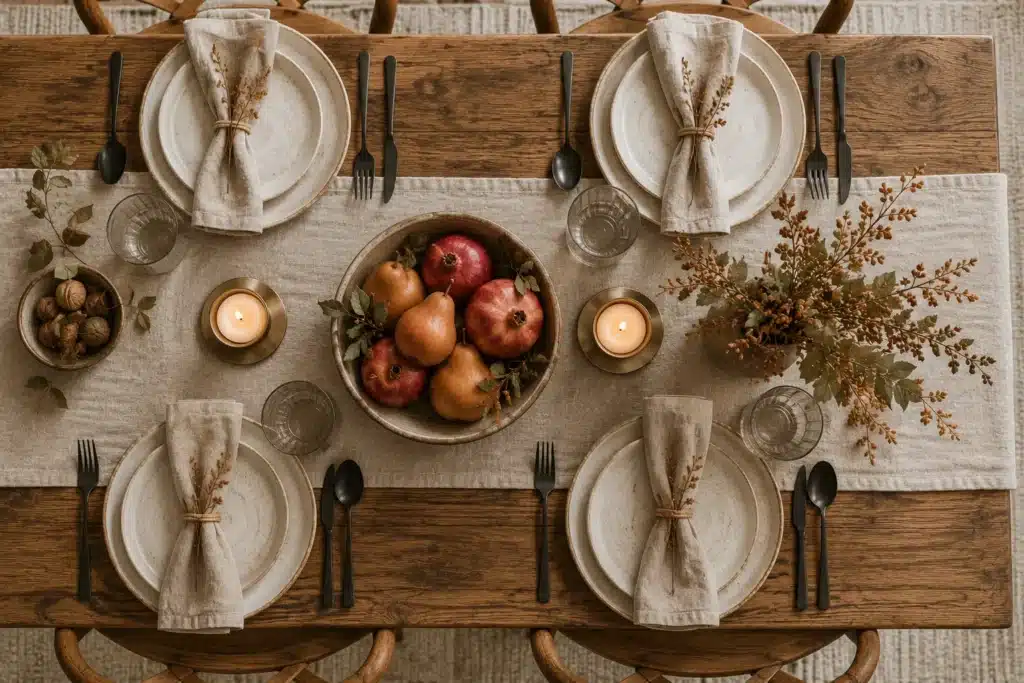
11. Create a Simple Linen Table Setting A linen runner in place of a bright summer tablecloth, paired with stoneware plates, shifts a dining table’s mood in minutes. Linen’s slight wrinkle and texture is part of the appeal — it should look relaxed and lived-in, not pressed and formal.
12. Decorate with Seasonal Fruit Instead of Pumpkins A bowl of pears, apples, or pomegranates does what a pumpkin display does — signals the season — while staying edible and inexpensive. It’s decor that restocks itself every grocery trip, so there’s never a moment it looks tired or picked-over.
13. Display Warm Ceramic Mugs and Stoneware If your everyday mugs live in a cabinet, consider an open shelf or a mug rack near the coffee station. Stoneware in warm glazes turns a functional item into visible decor, and it makes your morning coffee routine feel a little more considered without adding a single new object to the house.
14. Add Brass or Copper Accents for Instant Warmth Metal finish matters more than people expect. Cool chrome and stainless read as clean and modern; brass and copper read as warm and inviting. A few small swaps — drawer pulls, a utensil crock, a pendant light — shift the metal story of a whole kitchen without touching a single cabinet.
Cozy Bedroom Decor Ideas
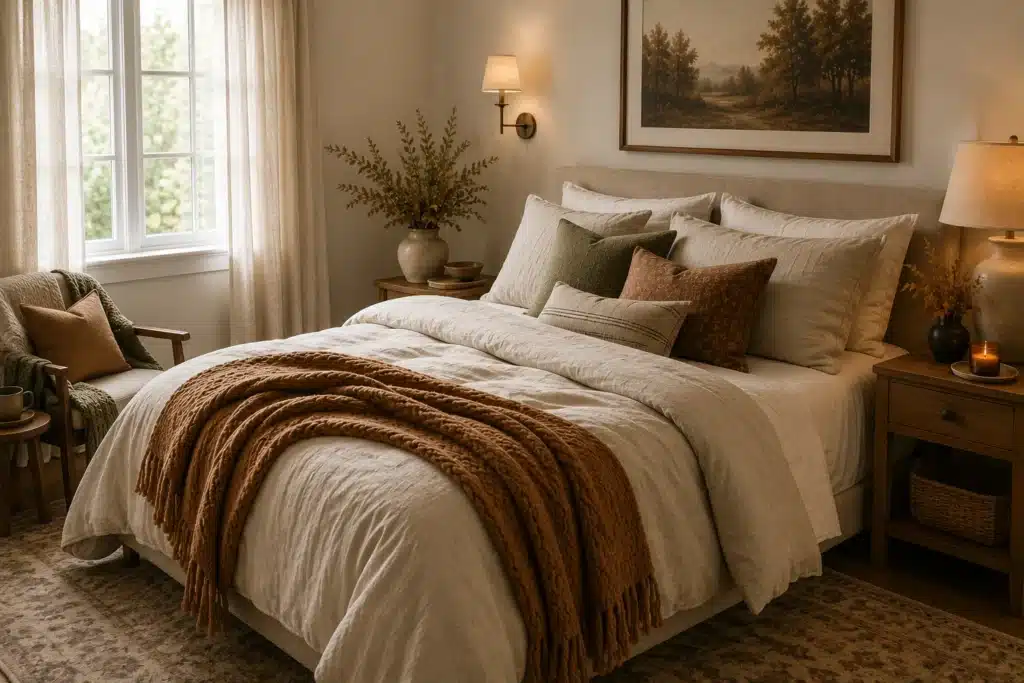
15. Refresh Bedding with Linen and Soft Earth Tones Bedding is the largest surface area in a bedroom, so it has outsized influence on the room’s temperature. Moving from crisp white or cool pastel to warm linen tones is the fastest way to make a bedroom feel like it’s shifted seasons, and it’s a change you feel the moment you climb in at night.
16. Layer Textured Accent Pillows The same logic as the living room applies here: two or three textures (bouclé, linen, ribbed knit) layered together create visual depth that a single flat pillow can’t. Keep the color palette tight so the texture — not the color count — does the work.
17. Create a Cozy Reading Corner A single armchair, a warm-toned throw, and a lamp with soft, low light turns an underused corner into the room’s most inviting spot. It’s a genuinely practical addition as evenings get darker earlier, giving you somewhere to sit that isn’t the bed or a desk.
Bathroom Decor Ideas
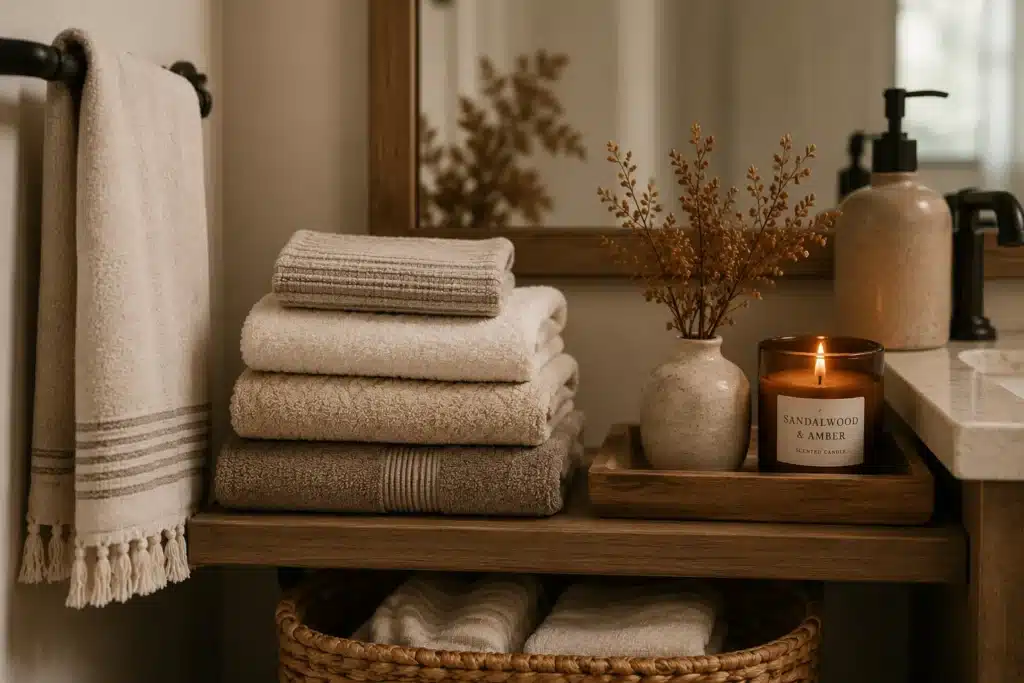
18. Swap Bright Towels for Warm Neutral Shades Towels are easy to overlook as a seasonal decor lever, but they’re one of the most visible textiles in a bathroom. Warm taupe, clay, or oatmeal towels instantly soften a space that’s often all hard, cool surfaces — tile, glass, chrome — and it’s a change that costs less than almost anything else on this list relative to its visual impact.
19. Style a Wooden Tray with Candles and Dried Botanicals A small styled vignette on the vanity or tub edge — a wood tray, a candle, a sprig of dried eucalyptus — brings the same layering principle used elsewhere in the home into a room that’s easy to neglect decoratively. It takes five minutes and makes the whole room feel finished.
Front Porch & Outdoor Spaces Decor
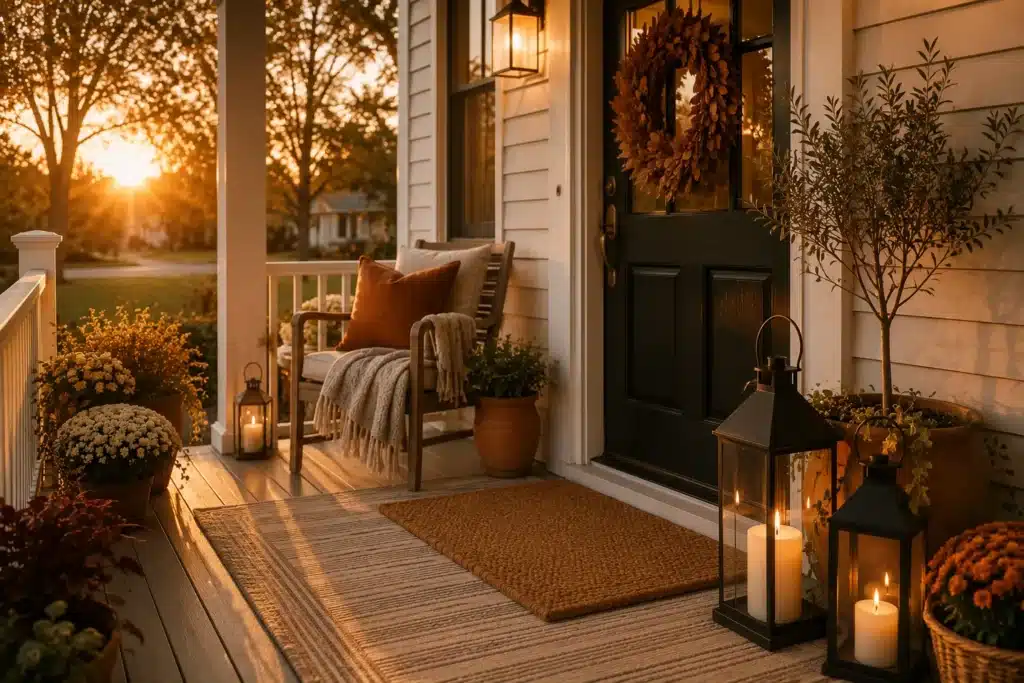
20. Decorate with Lanterns and Planters Instead of Pumpkin Displays Lanterns with warm-toned candles or string lights, paired with planters in terracotta or aged metal, create porch warmth without committing to a full pumpkin display before pumpkins are even in season. It’s a look that transitions cleanly into October when you’re ready to add them.
21. Layer a Neutral Outdoor Rug with a Seasonal Doormat An outdoor rug in a warm neutral, topped with a doormat in a subtler seasonal pattern, adds visual layering to a porch the same way an area rug does indoors — and it’s more weather-durable than fabric alone, so it holds up through changing conditions.
22. Use Olive Trees, Grasses, or Eucalyptus for a Softer Look These plants read as transitional rather than committed to one season, which means they’ll still make sense in your planters come November, saving you a swap-out in a few weeks.
23. Create a Cozy Porch Seating Area Swap bright summer outdoor cushions for warm neutral or rust-toned covers, and add a throw blanket over a chair arm. Porches often get more use in early fall’s mild evenings than in summer’s heat, so this is a genuinely functional update, not a purely decorative one.
24. Add Natural Wooden Crates for Texture Stacked wood crates work as plant stands, side tables, or simple styling props, and they add the same textural warmth outdoors that wood accents bring indoors — and they’re easy to source secondhand or repurpose from storage.
25. Finish with Subtle Seasonal Lighting Warm-toned string lights or a few lanterns along the porch rail extend usable evening hours as daylight shortens. It’s practical as much as decorative, giving you a reason to actually sit outside once the sun starts setting earlier.
The Best Early Fall Color Palettes
Color temperature is doing most of the work in early fall decorating, so it’s worth choosing a palette deliberately rather than pulling in warm tones at random.
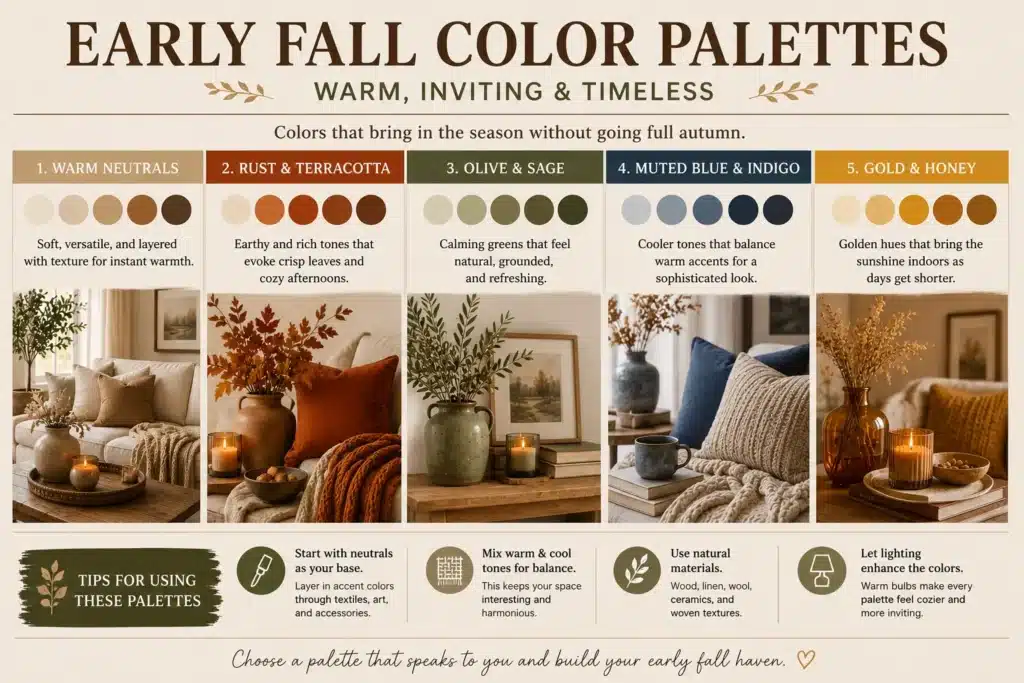
Warm White and Natural Oak — A soft, barely-there base that lets wood tones and texture carry the warmth. Good for renters who can’t paint and need the shift to come from textiles and accessories instead.
Terracotta and Cream — Terracotta brings genuine autumnal warmth without tipping into Halloween orange; paired with cream, it stays sophisticated rather than rustic.
Olive Green and Beige — A quieter, more muted combination that reads as organic modern rather than overtly seasonal — a good choice if you want the shift to be felt rather than obviously seen.
Soft Sage and Linen — Keeps a foot in summer’s cooler palette while still warming things up through material and texture; a gentle transition for anyone not ready to commit to deep autumn tones in August.
Rust with Muted Clay — The most classically “fall” pairing on this list, but muting both tones keeps it from reading as costume-y.
Chocolate Brown and Oatmeal — A deeper, richer combination best used in smaller doses — a throw, a vase, an accent chair — rather than across an entire room, since it can read heavy at scale.
How to Transition Every Room from Summer to Early Fall
Living Room — Pillow covers, a lighter throw, and one styled vignette on the coffee table or shelving.
Kitchen — A linen table runner, a bowl of seasonal fruit, and any metal-finish swaps you’re willing to make.
Bedroom — New bedding in warm neutral tones and a reading corner if you have the space for one.
Bathroom — Towels and a small styled tray; this is the fastest room to update because the textile footprint is small.
Entryway — A wreath, a console vignette, and a basket for blankets or shoes.
Front Porch — Cushion covers, a rug layer, and lanterns or string lights.
Doing all six in one pass is the fastest way to make a home feel cohesively transitioned rather than seasonal in one room and stuck in July everywhere else.
Early Fall Decor Trends for 2026
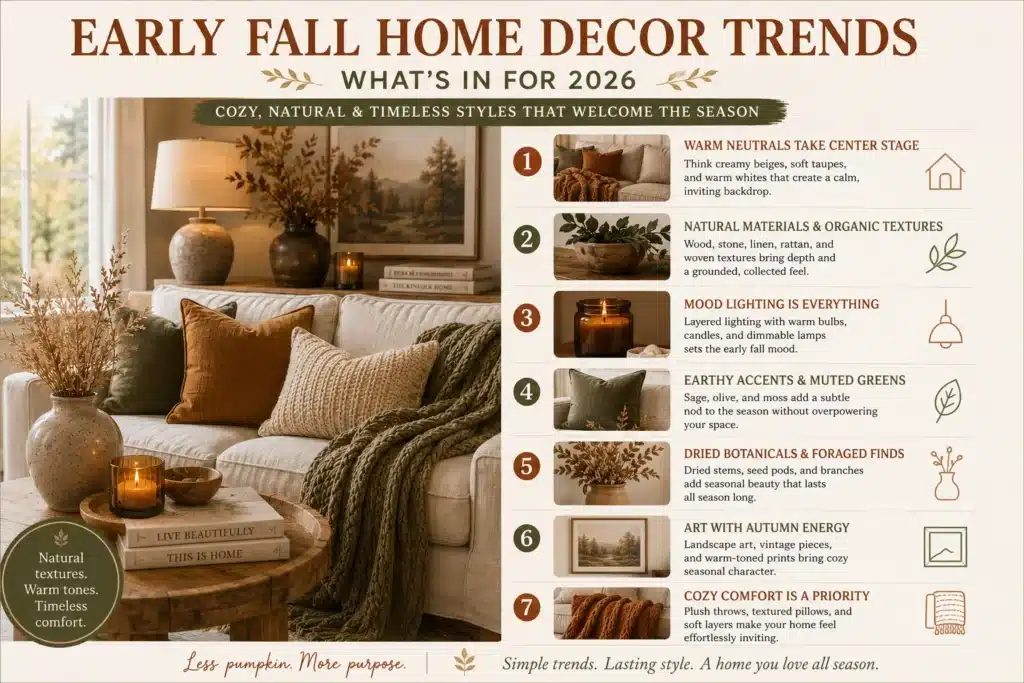
Warm Minimalism — Fewer objects, chosen for warmth and texture rather than quantity. The opposite of maximalist seasonal displays, and a good fit if your instinct is to under-decorate rather than over-decorate.
Organic Modern Styling — Clean-lined furniture paired with raw, natural materials — a continuation of a trend that’s been building for several years and pairs naturally with early fall’s material palette.
Layered Natural Textures — Multiple textures in the same warm tonal family, rather than one dominant material doing all the work.
Earth-Inspired Color Palettes — Terracotta, olive, rust, and warm neutral continue to lead over the bright orange and burgundy associated with older fall decorating trends.
Handmade and Artisan Decor — Visible imperfection — hand-thrown ceramics, imperfectly dried florals — over mass-produced uniformity.
Sustainable Seasonal Decorating — Reusing and restyling existing pieces rather than buying single-season items, which lines up with early fall’s whole premise of layering onto a summer foundation instead of replacing it.
Vintage Wood and Antique Brass Accents — Aged, patinated materials over anything that looks brand-new and glossy — texture and history read as warmer than polish, and this trend is showing up alongside a broader move toward richer, more “collected” interiors this year rather than uniform, matchy-matchy seasonal sets.
Budget-Friendly Early Fall Decorating Ideas
Shop Your Own Home Before Buying Anything — Walk through every room and pull anything already in a warm tone, regardless of what room it’s currently in. Most homes have more usable pieces tucked away than people expect.
Rearrange Existing Decor for a Fresh Look — Moving a vase from the kitchen to the living room, or a throw from the bedroom to the sofa, costs nothing and often makes a bigger visual difference than a new purchase would.
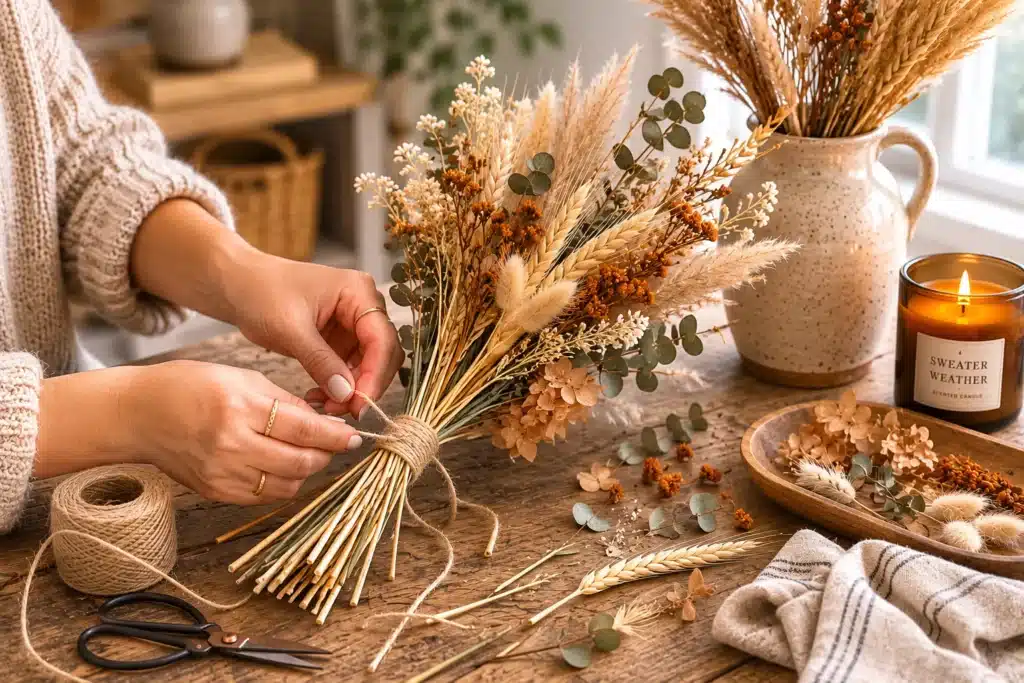
Collect Natural Elements Outdoors — Fallen branches, seed pods, and grasses from your own yard or a walk cost nothing and look more authentic than store-bought dried florals.
DIY Dried Floral Arrangements — Air-drying grocery-store or garden flowers upside down for one to two weeks turns a $10 bouquet into decor that lasts for months.
Update Pillow Covers Instead of Buying New Pillows — Covers alone run a fraction of the cost of new pillow inserts and achieve the same visual shift.
Refresh Decor with Thrifted Wooden Pieces — Secondhand wood trays, bowls, and boards often already have the worn, warm patina that new pieces are styled to imitate — and they cost less.
If low-cost, hands-on decorating is your thing, our budget-friendly DIY decor ideas using recycled materials post pairs well with this section — many of the same reuse-and-repurpose principles apply directly to early fall styling. And if you’re new to DIY decorating altogether, our DIY home decor project guide by skill level is a good starting point for picking a project you’ll actually finish.
Common Early Fall Decorating Mistakes to Avoid
- ✓
Decorating too early with pumpkins everywhere — Save literal harvest imagery for closer to October; in late August it reads as premature rather than festive.
- ✓
Bringing out Halloween decor too soon — Early fall and Halloween are different seasons decoratively, even if they’re close on the calendar.
- ✓
Using too many bright orange accents — A little rust or terracotta reads sophisticated; too much saturated orange reads costume-like.
- ✓
Overcrowding every surface — Early fall decorating works best as restrained layering, not maximalist display. More objects doesn’t mean more cozy.
- ✓
Ignoring natural textures — Color alone won’t carry the transition; texture is what makes a room feel warm rather than just differently colored.
- ✓
Choosing dark colors too early — Deep chocolate and burgundy tones read better once the weather has actually turned cold; introducing them too early can make a late-summer room feel heavy rather than cozy.
- ✓
Forgetting layered lighting — A single overhead light source undercuts every other cozy choice in the room; lighting needs to be part of the plan, not an afterthought.
How to Decorate for Early Fall in One Weekend
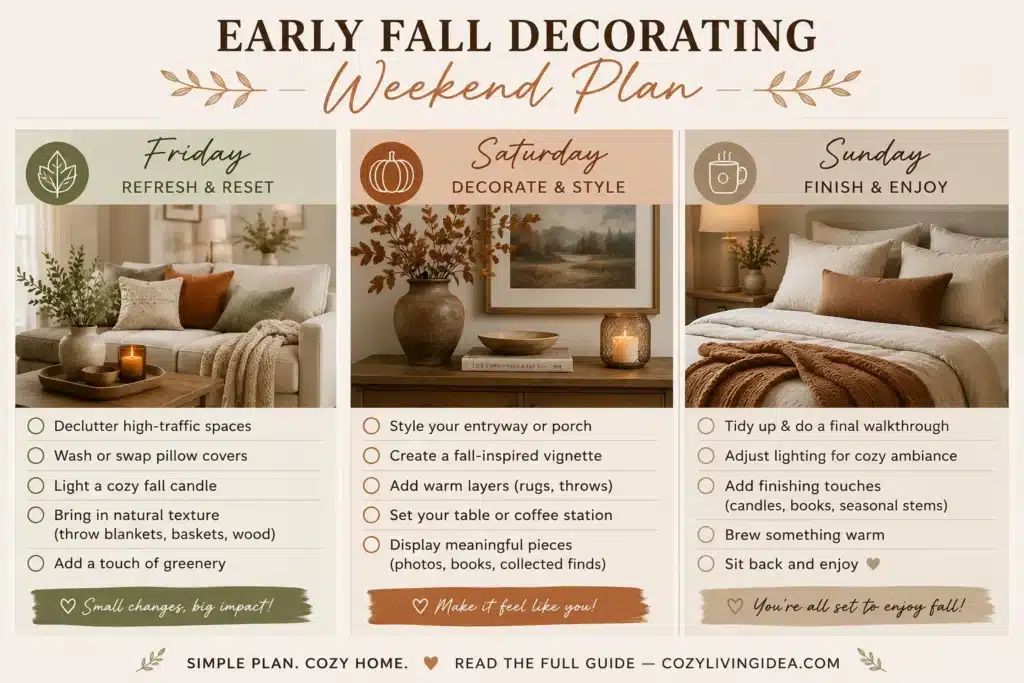
Friday: Declutter Summer Decor Remove bright summer textiles, tropical greenery, and beach-trip accessories from main living spaces. Store them rather than discarding them — you’ll want them again next June.
Saturday: Add Texture and Natural Elements Bring in the new textiles (pillow covers, throws, table linens), style shelves and consoles with warm ceramics and wood pieces, and add any dried florals or branches.
Sunday: Style, Layer, and Fine-Tune Walk through each room, adjust lighting (bulbs, candle placement, lamp positioning), and make final styling adjustments — this is the day to step back and look at each room as a whole rather than piece by piece.
Conclusion
Early fall decorating rewards restraint. The homes that feel most effortlessly seasonal usually aren’t the ones with the most decor — they’re the ones where a few deliberate choices in texture, color, and light did the job. Start with small, intentional updates, and let your home carry those changes from late summer all the way through Thanksgiving with only minor adjustments along the way.
Frequently Asked Questions (FAQ)
Late August through mid-September, once daylight and temperature have started shifting but before traditional harvest decor feels seasonally appropriate.
Warm-toned textiles, dried natural elements, ambient lighting, and earth-tone ceramics — anything that shifts a room’s temperature without relying on literal harvest imagery.
Lean on color palette, texture, and lighting instead. Seasonal fruit, dried grasses, and warm textiles all signal the season without a single pumpkin.
Work room by room using the five-step formula: keep your summer foundation, warm the color palette, layer texture, adjust lighting, and bring in natural elements.
Start by shopping your own home and rearranging what you already own; add DIY dried florals and thrifted wood pieces before buying anything new.
Early fall decor is transitional and restrained — texture and color temperature carried on your existing summer foundation. Autumn decor is fuller and more literal, with harvest imagery like pumpkins and corn stalks that suits closer to October.