
Building a Cozy Corner You’ll Actually Use Every Day
Most homes have one: a corner that was supposed to become a reading nook or a quiet spot to unwind, and instead became a landing pad for laundry, mail, or whatever didn’t have another home. The intention was good. Somewhere between picking the chair and actually using the space, the follow-through didn’t happen.
The gap usually isn’t effort or money. It’s that a cozy corner needs a few specific things working together, and most attempts get one or two of them right while missing the rest.
Why the Chair Alone Doesn’t Do It
The instinct is to start with seating — a comfortable chair, maybe a small side table — and call it done. But a chair by itself doesn’t create a destination; it just adds a place to sit inside a room that still doesn’t pull you toward it.
A corner that actually gets used tends to have a few more layers than that: a light source that makes it worth sitting there after dark, some visual boundary that separates it from the rest of the room, and enough softness nearby that it doesn’t feel like an afterthought bolted onto a hallway.
The Four Things a Cozy Corner Actually Needs
A Reason to Sit Down After Dark
A corner that only works in daylight only gets used half the time. A floor or table lamp with warm, dim light does more to make a spot feel inviting in the evening than almost anything else — overhead lighting alone tends to make a corner feel like an extension of the room rather than its own space.
Something That Defines the Edges
A corner without a visual boundary blurs into the rest of the room and stops feeling like its own destination. A tall plant, a low bookshelf, or even a folding screen gives the eye a cue that this spot is separate — worth walking over to, not just passing through.
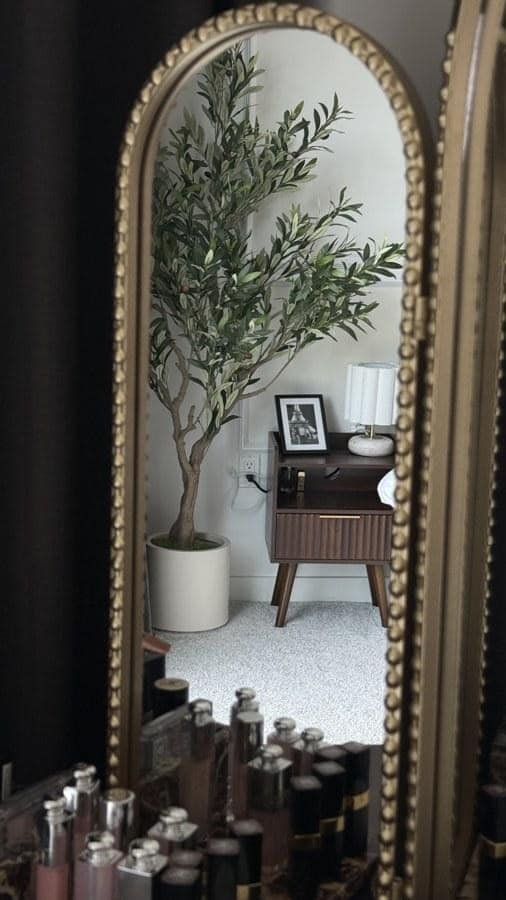
Caught in a dressing mirror’s reflection, a tree marks the edge of this corner without a single piece of furniture needing to move. It does the quiet work of saying “this space is separate” without adding any bulk to the room.
Texture Within Arm’s Reach
A throw blanket that’s actually been used — not folded museum-style — a textured pillow, a woven basket for whatever you’re reading. These small, touchable details are what make a corner feel like it’s meant for a person, not a photograph. A broad-leafed plant like a monstera adds its own kind of texture here too — big, sculptural leaves read as tactile even before anyone touches them.
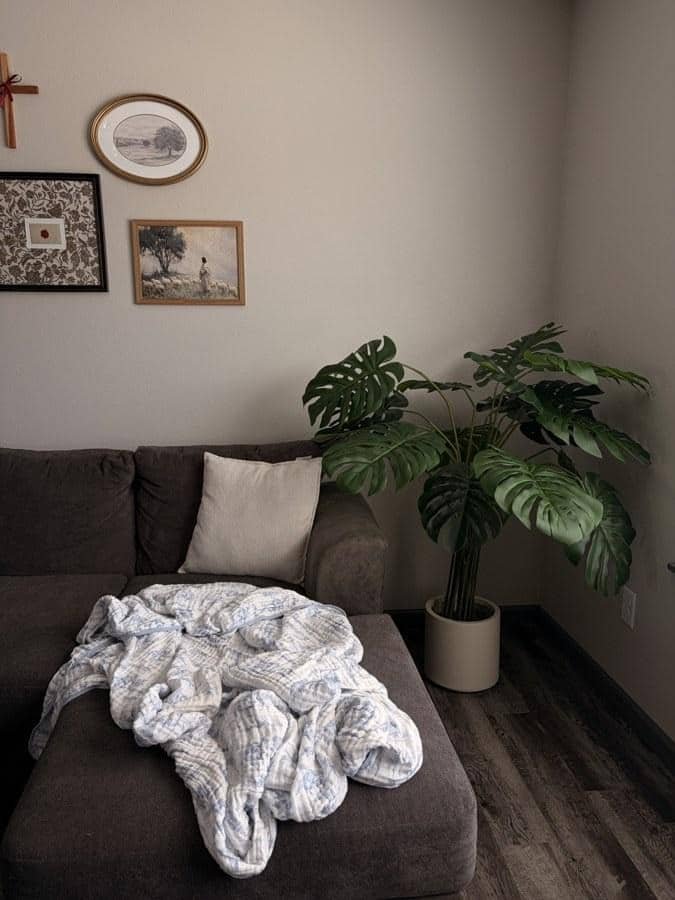
This is what an actually-used corner looks like: a blanket left exactly where it was thrown off, a plant that never asks to be watered, and nothing arranged for a photo. The imperfection is the whole point.
Greenery That Doesn’t Add to the To-Do List
Live plants are lovely in a reading corner, but a spot people return to daily is also a spot where a struggling plant becomes visible fast — every wilting leaf sitting in your eyeline while you’re trying to relax.
A lot of people solve this the practical way: keep the plants they enjoy caring for somewhere else, and let the corner’s greenery be something that always looks its best. It’s part of why quietly convincing options — a few Rootless trees have shown up in enough of these corners lately to notice — have become such an easy fit for the one spot in the house where low-maintenance actually matters most.
Choosing the Right Corner Before You Buy Anything
Not every corner is equally good raw material, and the difference has more to do with the corner’s setup than the decor going into it. Corners backed by a solid wall, rather than open on two sides, tend to feel more restful for a fairly well-documented reason: a 2008 study on restaurant seating found that people under stress consistently chose seats next to walls or partitions over open, exposed ones, describing it as a way to regain a sense of control over the space. A reading corner backed by something solid, with a clear sightline to the rest of the room, is borrowing that same instinct.
Beyond backing,3 practical checks are worth running before committing to a spot: is there an outlet within reach for a lamp (running a cord across a walkway undoes the “settled” feeling fast), does the spot get harsh afternoon glare that would make daytime reading uncomfortable, and is it out of the main foot-traffic path through the room. A corner that fails more than one of these checks is usually a sign to look elsewhere, no matter how much natural light or square footage it has going for it.
Making the Corner Earn Its Keep Without Losing the Feel
A corner that only supports one activity is more likely to sit empty most days. A small side table, sized to hold a drink and a book without becoming a catch-all surface, lets the same spot double as a tea break or a laptop-free pause without requiring a redesign. The key is restraint: one surface, one lamp, one plant. Adding a second chair or a media console tends to pull the corner back toward “extra living room seating” and away from the single-person retreat that made it work in the first place.
It’s also worth rotating the textiles — the throw, the pillow cover — with the seasons, while leaving the lamp and the plant as the constants. Swapping textures keeps the corner feeling current without touching the two ingredients that took the most thought to get right the first time.
Putting It Together Without a Renovation
None of the four ingredients above require moving walls or buying furniture. In order of easiest to hardest:
- ✓
Add a warm lamp. This alone changes how a corner feels after 6 p.m. more than any other single change.
- ✓
Bring over one textured object already in the house. A throw from the bedroom, a basket from the closet — borrowed items count.
- ✓
Add height to mark the boundary. A tall plant is the simplest way to do this without new furniture.
- ✓
Let it get a little messy. Resist the urge to keep the corner photo-ready. The rumpled blanket is a feature, not a flaw.
Common Mistakes That Empty a Cozy Corner Back Out
A few habits are responsible for most abandoned reading nooks. Choosing the corner based on how it photographs rather than where you’d actually want to sit is the most common one — a corner with bad afternoon glare or no nearby outlet for a lamp will lose out to the couch every time, no matter how nice the chair is.
Skipping the lighting step and relying on daylight is a close second, since it quietly limits the corner to a few usable hours a day. And treating the space as “done” after the first setup, rather than letting a blanket get rumpled or a book stack grow, undoes the sense that it’s actually lived in.
The Test of Whether It’s Working
A cozy corner earns its name the same way a good coffee shop table does — not by how it looks empty, but by whether you actually reach for it at the end of a long day. If the space still feels like something you walk past rather than toward, it’s usually missing one of the four ingredients above, not in need of a bigger budget or a full redo.
Start with the lamp. Everything else tends to follow once there’s a reason to sit down after dark.
Conclusion
A cozy corner isn’t a furniture purchase — it’s a well-chosen spot plus four small decisions layered on top of it: a light worth switching on after dark, a boundary that separates it from the rest of the room, texture within reach, and greenery that never becomes one more thing to worry about. Get the location right first, add the ingredients one at a time, and resist the urge to keep it picture-perfect. The corners that actually get used are the ones that look like someone lives in them.