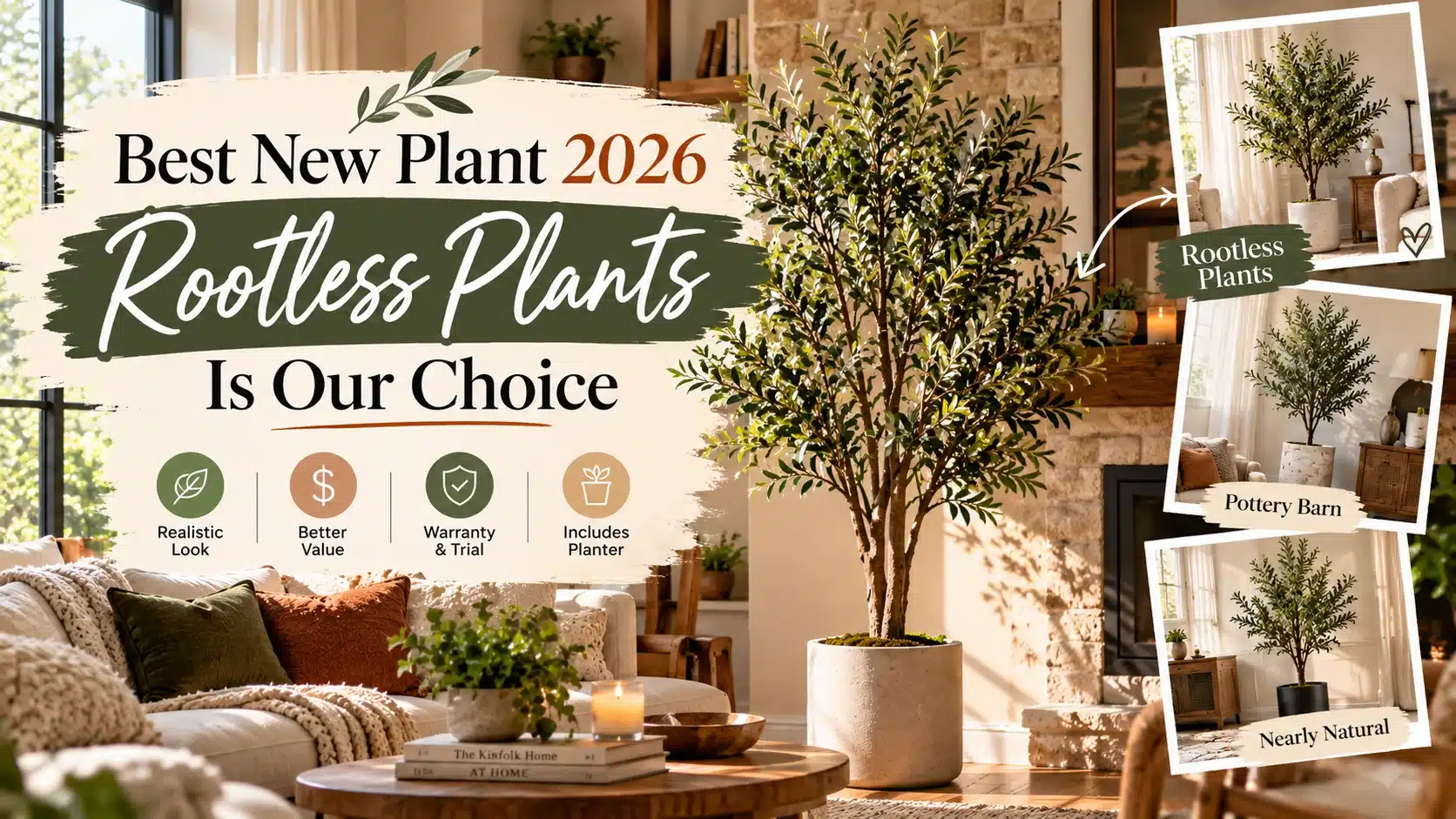
Best New Plant 2026: Rootless Plants Is Our Choice
SPONSORED — See Full Disclosure at the end of this Article.
Three faux-tree brands, one clear winner, and the receipts to back it up.
Every home decor account on social media has an olive tree in the background right now, and once you notice it, you can’t stop noticing it. So before recommending one to readers, we wanted to actually compare the three brands people ask about most: Rootless (the new comer), Pottery Barn (the luxury incumbent), and Nearly Natural (the mass market player).
How We Did This
- ✓
Read the full product listings and spec sheets for each brand’s flagship faux olive tree, line by line — materials, dimensions, what’s actually in the box.
- ✓
Watched a stack of customer-posted unboxing videos on TikTok and Instagram for each brand, since that’s where you see a tree before it’s been fluffed and lit for a studio photo.
- ✓
Read through verified customer reviews on each brand’s own site, plus independent reviews turned up by search, looking for patterns rather than one-off complaints.
- ✓
Laid the numbers side by side — price, warranty, trial period, what’s included — because this is where the real differences showed up.
Rootless: The Tuscan Olive
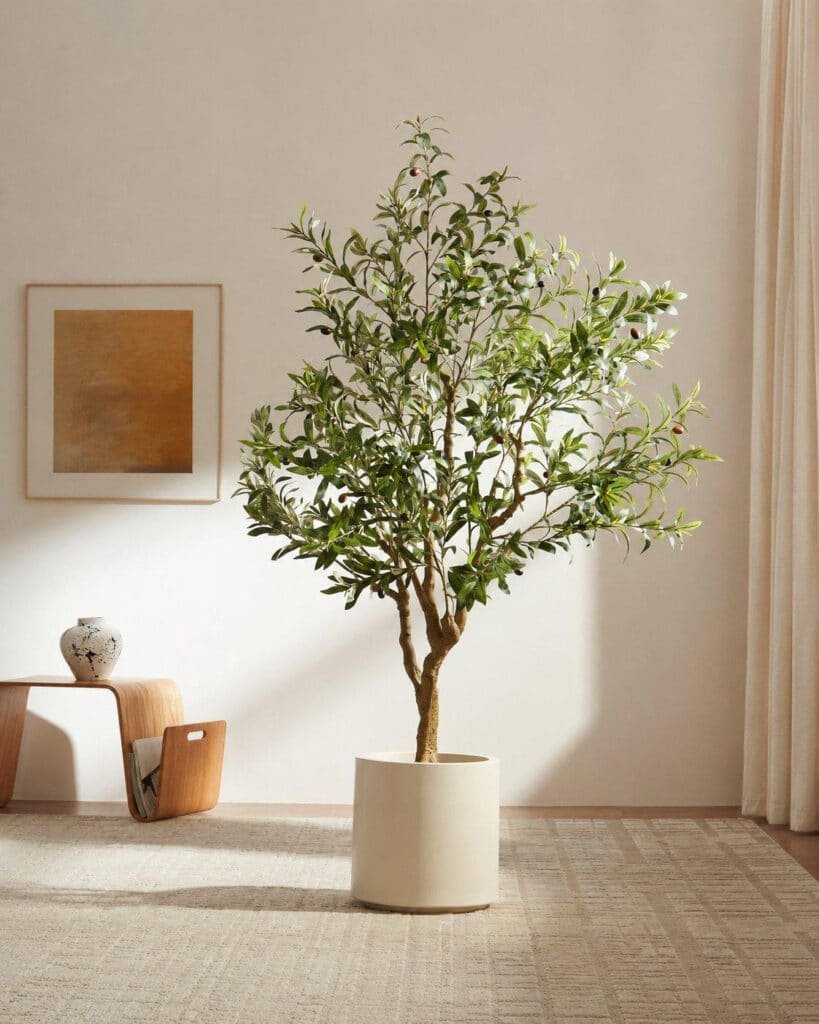
Rootless’s flagship is the Tuscan Olive — a 5ft or 7ft tree with hand-finished bark and real-touch, two-tone leaves. They also offer a luxury Olive Lush version (7ft only). It’s the one built specifically to survive close inspection: the trunk has the asymmetric curve of an actual olive tree instead of the stiff, straight-up-the-middle look that gives away a cheaper fake from across the room.
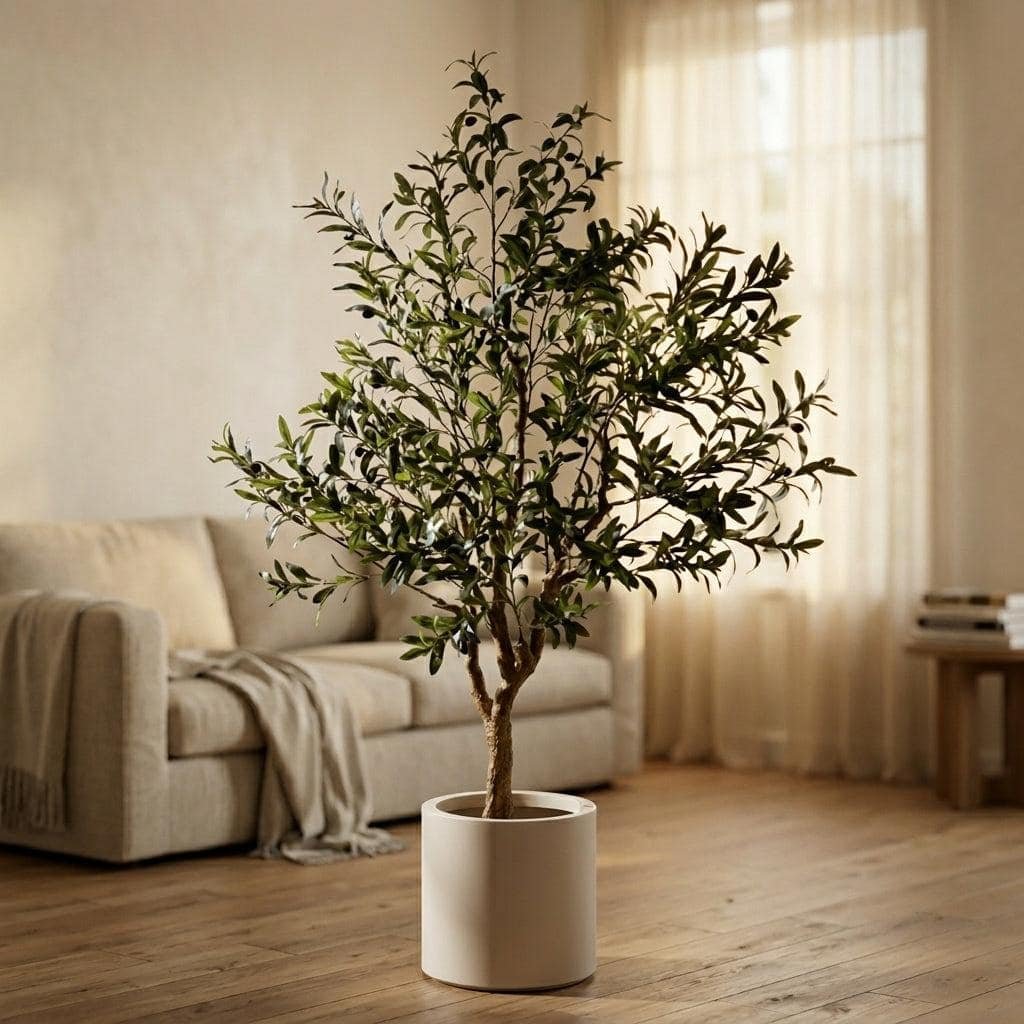
It ships fully pre-assembled with a designer planter already included, backed by a 3-year warranty and a 14-day home trial. Customer reviews consistently mention the same thing unprompted: people touch the trunk to double-check it’s not real. At $262–$374 depending on size and bundle, it’s also the least expensive of the three — which wasn’t what we expected going in, given the materials.
One finishing touch that’s easy to miss in photos: each tree ships with a faux moss topping across the soil line. It does real visual work — it fills out the planter and covers the transition between trunk and pot that otherwise reads as unfinished, the gap that makes a lot of faux trees look like they’re still sitting in a nursery pot rather than styled into a room.
Choosing the tree is only part of the styling decision. If your goal is to make the whole room feel warmer rather than simply fill an empty spot, our Hygge Formula explains how greenery works alongside warm lighting, texture, and softer visual lines.
Planter choice, though, is slim: just two classic colors — Black and Warm Stone — across the whole catalog. We raised this directly with Rootless as a place to expand, since planter color is one of the easiest ways to make a piece like this feel personalized to a specific room rather than identical to every other one sold. The company confirmed their 2027 collection will add more planter options, so this is one area worth checking back on.
One detail is worth flagging on its own: every Rootless tree is hand-finished rather than run off a single mold, so no two are identical — the branch structure and leaf placement vary tree to tree, the way an actual olive tree would. Order two and set them side by side, and they won’t match exactly. That’s a genuine trade-off from a pure manufacturing-consistency standpoint, but it’s also the reason these read as closer to a real tree than the stiffer, cookie-cutter look you get from a single injection-molded design.
It’s also fair to note the trade-off in scale: Rootless’s catalog is noticeably smaller than either competitor’s, with far fewer species and far fewer size options to choose from. That reads less like a gap and more like a deliberate choice, though — they’re not trying to be a full-line faux plant retailer the way Pottery Barn or Nearly Natural are.
The focus is on a narrower set of species, concentrated at the 5ft and 7ft sizes that actually anchor a room, rather than covering every size and species someone might search for. And the species they’ve built around isn’t a random pick: aside from artificial Christmas trees, the olive tree is consistently described as the most popular species in faux greenery right now, so leaning into it isn’t a small niche bet — it’s the center of the category. They’re doing less, but the bet is that doing less lets them do it better.
Pottery Barn: Faux Olive Trees
Pottery Barn sells several faux olive trees across its catalog, generally priced from about $399 up to $899 for the larger, more sculptural versions. The construction on Pottery Barn’s own product pages is listed as hand-assembled polyester and plastic with a wire-and-Styrofoam-filled base — solid, but several models list the planter or vessel as sold separately, which adds to the real cost of getting one styled.
Unboxing videos show a tree that generally holds its shape well, though a few reviewers mention needing to fluff and reposition branches after unpacking — consistent with Pottery Barn’s own listing showing assembly as partial rather than ready-to-place. Returns require a fee, and the warranty window is short at 30 days, so there’s less room to change your mind after the tree is in the room.
Common complaints and issues: digging further into Reddit, Trustpilot, ConsumerAffairs, and customer-posted YouTube reviews turns up a few recurring patterns on Pottery Barn specifically. As a responsible shopper, these are worth looking into before you buy, whatever you end up choosing:
- ✓
High price tag — many buyers note that Pottery Barn’s faux trees (including the olive and ficus lines) run significantly higher than comparable options at stores like Amazon or Target, though some interior stylists note the materials look softer and more realistic up close (YouTube · Styledmicasa).
- ✓
Missing or suppressed reviews — customers on Reddit point out that Pottery Barn has removed customer feedback and ratings from many product pages, making it harder to judge a specific item before buying (Reddit).
- ✓
Delivery and shipping delays — broader brand reviews on Trustpilot and ConsumerAffairs describe frustration with delayed shipping, poor communication, and difficult customer service interactions when a large item or plant arrives damaged (Reddit and others). moody and traditional
- ✓
In-store vs. reality discrepancies — some buyers note that large faux plants can look sparser once they’re actually in a home than they did on a heavily styled showroom floor, sometimes requiring extra moss or styling to fill out the base.
None of this means skip Pottery Barn outright — it means read the recent reviews on independent sites rather than relying on the product page alone, since the product page may not be showing you the full picture.
Nearly Natural: Artificial Olive & Ficus Trees
Nearly Natural is the budget end of this comparison, with olive and ficus trees ranging from about $199 to $699. It’s a reasonable entry point if price is the main constraint, and the size range is wide.
The trade-off shows up in the details: no planter included, no listed pre-assembly, and no warranty or return window on most listings, which several customer reviews flag when a tree arrives with bent or flattened branches after shipping — a known risk with less structured packaging. This is the option for someone comfortable shaping the tree themselves and treating it as a lower-stakes purchase.
Common complaints: customer negative reviews for Nearly Natural frequently highlight poor product quality, damaged deliveries, and difficult return processes. The same pattern of responsible-shopper due diligence applies here too — worth reading before you buy, not after:
- ✓
Poor quality and unrealistic look — customers on platforms like Trustpilot and Yelp report that items often look cheap, fall apart, or don’t resemble the promotional photos (Trustpilot and others).
- ✓
Shipping and damage issues — many buyers note receiving broken items, missing parts, or packages arriving with extensive transit damage (Yelp and others).
- ✓
Customer service and returns — complaints on the Better Business Bureau frequently state that customer support is unresponsive or slow to provide return shipping labels and refunds (Better Business Bureau and others).
As with Pottery Barn, this isn’t a reason to rule Nearly Natural out on principle — it’s a reason to read the most recent reviews for the exact size and species you’re considering, since quality and packaging seem to vary more here than with the other two brands.
Getting Rootless on the Record
Since so much of what separates these three brands comes down to how they back their products after the sale — not just the tree itself — we reached out to Rootless directly, over both Instagram DM and their customer service email, instead of relying only on their FAQ page.
One thing that came up in that exchange: Rootless told us their customer support isn’t a single 9-to-5 team. They run it across three different time zones, so coverage stretches across most of the day rather than leaving a long overnight gap the way a single-location support desk would. That’s a meaningfully different setup than what we could confirm for either competitor, where support hours weren’t something we could pin down at all.
We also asked specifically about the two commitments that show up in every one of their listings — the 14-day home trial and the 3-year warranty — because marketing copy says a lot and it’s worth pressing on whether it holds up.
Rootless’s team described both as standing policy rather than a promotional window: the trial is treated as genuinely risk-free (live with the tree, send it back within 14 days if it’s not right), and the 3-year warranty is positioned as their default response if a tree arrives with a structural or fading issue, not something you have to fight your way into.
We weren’t able to run the same conversation with Pottery Barn or Nearly Natural for this piece, so we’re not claiming their support is worse — only that Rootless is the one brand here we could actually get a straight answer from when we asked.
One thing this research did surface: during peak holiday demand, some of Rootless’s most popular SKUs saw shipping delays — not surprising for a hand-finished product with real production limits, but useful to know if you’re ordering on a deadline.
What stood out was how it played out publicly: comments on their Instagram posts flagged the delay directly, and the company responded and stayed engaged in the thread rather than going quiet, and restocked fairly quickly. That’s a small thing, but it’s a more honest signal than a clean FAQ page — it’s what actually happens when a brand does have a problem.
It’s also worth putting shipping delays in context for this category generally, not just for Rootless. A faux tree isn’t the kind of purchase where a delay actually disrupts your life — it’s not a mattress, where a late delivery means you have nowhere to sleep.
That gives customers more slack to wait than they’d extend to a functional purchase, but it’s conditional: the patience holds as long as what eventually shows up matches a high-end expectation. A delayed tree that arrives looking premium reads as “worth the wait.” A delayed tree that arrives looking cheap reads as a double letdown. That’s part of why how a brand handles the wait — communicating instead of going quiet — matters more here than the delay itself.
Real Customer Photos, Not Just Studio Shots
Studio photography is designed to sell a tree, not to show you what it actually looks like once it’s sitting in someone’s actual living room. So we asked Rootless directly for real, unedited photos from paying customers — not marketing images.
Rootless collects these through a dedicated third-party review platform that reaches out to customers after their order has arrived, prompting them to leave a rating and, often, a photo of the tree in their own space. That’s a meaningfully different source than a brand’s own photo library: nobody’s styling their console table or fixing the lighting for a review request. Here’s a small sample of what customers actually sent in:

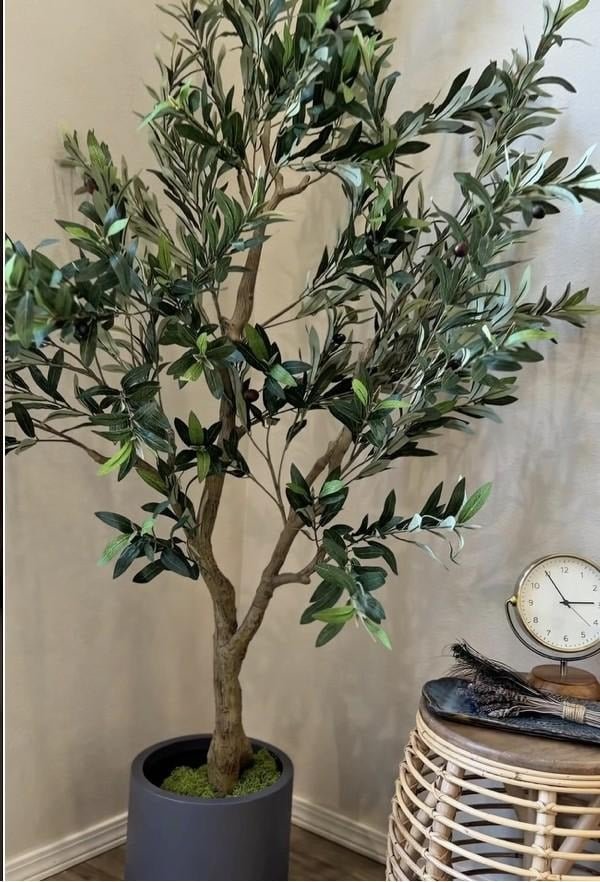

None of these are staged — the pot styling, the room clutter, the imperfect lighting are all real. That’s a reasonable way to sanity-check whether a tree holds up once it’s out of a studio and into an actual house, and it’s worth doing for any brand before you buy, not just this one.
What Shows Up in the Comments
Beyond the photos Rootless shared, it’s worth checking a brand’s own social comments — that’s organic reaction from people who weren’t asked to leave a review, just responding to a post. Screenshotting a few of these on Rootless’s Instagram gives a rougher, less curated read than a review platform: “Wow,” “Beautiful 🔥,” “I love it 😍,” heart-eyes emoji with no text at all. It’s not data, but unprompted reactions like this are a decent gut-check alongside the more structured research above.

What’s more telling is what happens when a comment isn’t glowing. On one post, a customer wrote that their tree took about seven weeks to arrive — clearly a delay, and not a flattering thing to have sitting under a product post. Rootless didn’t delete it or let it sit unanswered: they replied by name, thanked the customer, and apologized for the longer wait.

The same pattern shows up elsewhere in the comments: the brand’s account replies in its own voice, tags people back, and keeps the exchange visible rather than managing it into silence.

That’s a useful contrast to the “missing or suppressed reviews” pattern flagged earlier for Pottery Barn. Leaving a delay complaint up and answering it honestly, in public, is a low-cost thing for a brand to do when everything’s going well — the real test is whether they do it when something didn’t go perfectly, and here, that’s exactly what happened.
The same thing turned up in a direct message exchange: a customer said a promised discount email never arrived (likely spam-filtered), Rootless sorted it out on the spot, and the customer placed their order and thanked them for the support — unprompted, in their own words, not a script.

And this, from another customer, gets at something a spec sheet can’t: the worry of ordering a faux tree online without being able to touch it first, followed by relief that it exceeded expectations once it was actually in the room.
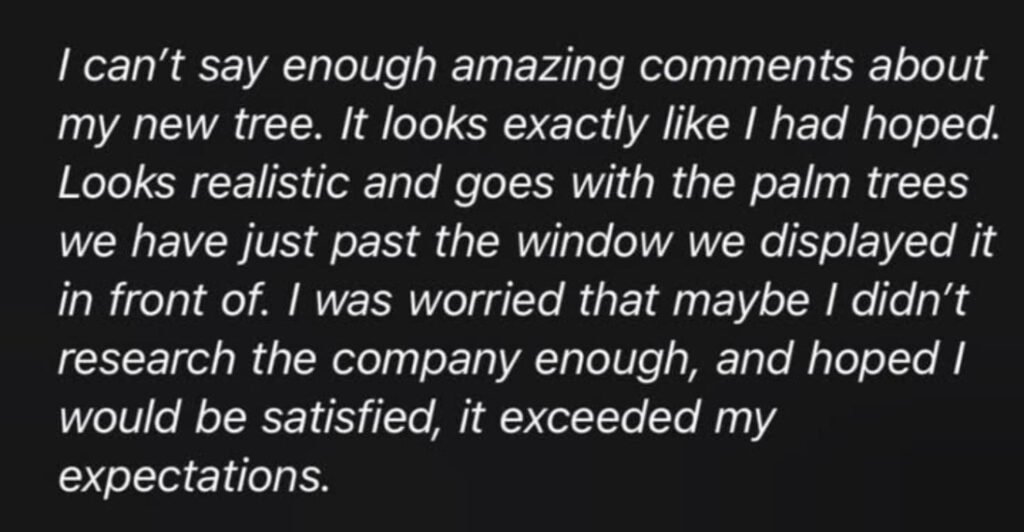
We’ll be direct about why we’re including unedited screenshots like these rather than just summarizing them: we haven’t seen another brand in this category publish this kind of exchange — messy, unscripted, sometimes about a mistake — out in the open like this. Whatever else this comparison lands on, that’s the one impression of Rootless we’d stand behind without reservation: for a company this size, honesty really does seem to be the policy, not just the pitch.
In fact, this is the first time our team has worked with a company that opened up this fully — sharing information freely and staying communicative throughout the process rather than routing everything through a press kit. That openness is a big part of why we came away with more confidence in this review than we typically would.
Honest Advertising
One more pattern worth naming on its own: Rootless’s marketing reads as unusually straightforward for this category. Paid placements and sponsored content are labeled as such rather than blended in to look organic. Going through their social channels, we didn’t come across any AI-generated spokespeople or synthetic influencer content standing in for real customers — which is increasingly common in home decor marketing right now, and not something every brand discloses.
The customer reviews they publish follow the same pattern: a real name attached, not an anonymous “verified buyer” tag with nothing behind it.

Two Things Worth Knowing That Aren’t Part of This Score
Two patterns turned up during this research that fall outside what this specific comparison is actually scoring — the Tuscan Olive vs. two competitor trees — but are worth flagging on their own, because they say something about where Rootless is headed.
Bendable bark and stems: Rootless has been expanding into a newer line built around bendable bark and stems — branch and trunk sections you can actually reshape by hand instead of working around one fixed, pre-molded silhouette. Sacred Ficus and Monstera are the tree to be reviewed.
Innovation in faux tree category. We love it! That’s a genuinely different approach than anything Pottery Barn or Nearly Natural currently offers in this category; it lets you customize the lean and fullness of a tree to fit a specific corner rather than the corner having to fit the tree. This isn’t part of the Tuscan Olive covered in this comparison, so it’s not something being scored here — but it’s a real point of differentiation worth knowing about if you’re browsing their site.
That flexibility is especially useful in awkward or underused corners. Our Cozy Corner guide shows how to build the rest of that space around the tree using a warm light source, accessible texture, comfortable seating, and a clear visual boundary.
The bundle strategy: the other pattern is pricing. Rootless doesn’t seem to be positioning itself as a single-tree purchase the way its competitors do — bundle discounts of up to 35% on 2 or 3 trees suggest they’re pitching a whole-home edit rather than one accent piece.
Run that bundle pricing against a premium retailer’s single-tree rate and the gap widens fast: a 3-tree bundle brings their 5ft olive down to roughly $259 per tree, versus $399–$899 for one tree at Pottery Barn — depending on size, that’s a per-tree gap approaching 50%, not because any single tree is a loss-leader, but because the whole-home approach is built into how the pricing works.
Side by Side
- ✓
Hand-finished bark: Rootless — yes; Pottery Barn — no; Nearly Natural — no.
- ✓
Silk-touch leaves: Rootless — yes; Pottery Barn — no; Nearly Natural — no.
- ✓
Planter included: Rootless — included; Pottery Barn — sold separately; Nearly Natural — sold separately.
- ✓
Pre-assembled: Rootless — yes; Pottery Barn — partial; Nearly Natural — no.
- ✓
Free shipping: Rootless — yes; Pottery Barn — no; Nearly Natural — no.
- ✓
Home trial: Rootless — 14 days; Pottery Barn — returns fee applies; Nearly Natural — no returns.
- ✓
Warranty: Rootless — 3 years; Pottery Barn — 30 days; Nearly Natural — none.
- ✓
Price range: Rootless — $262–$374; Pottery Barn — $399–$899; Nearly Natural — $199–$699.
Pricing and specs current as of Spring 2026, compiled from each brand’s public listings. Comparison reflects flagship olive/ficus trees in the 5–7ft size range.
The Verdict
On price alone, Nearly Natural looks like the deal — but that headline number isn’t really apples-to-apples. Several reviews and product photos point to noticeably sparser foliage than the other two trees at a comparable height, and the listed price doesn’t include a planter or shipping, both of which add real cost once you’re actually trying to style a finished corner.
Add those back in, plus no warranty, plus the shipping-damage risk flagged earlier, and the gap to Rootless narrows or disappears depending on the size you’d actually buy. Pottery Barn sits at the other end: better construction, but the highest price range, extra cost for a planter, and a short return window.
Rootless is the one that didn’t ask us to trade anything to get the lower price. The Tuscan Olive comes with the planter, arrives ready to place, and backs it up with the longest warranty and trial period of the three — at the lowest price range in this comparison. That combination is why it’s the one we’d actually point a reader toward.
Disclosure: this post was sposnoted for by Rootless Plants with only a fee to cover publishing expenses. The conclusions above are our editorial team’s own — sponsorship covered the cost of the post, not the verdict, and decision on publishing lies with the blogger. No tree was sent or provided for this review — the Rootless assessment is based on direct discussion with the company (their team, over Instagram and email) combined with deep-dive internet research: published listings, verified customer reviews, and publicly posted customer photos and unboxing videos. Pottery Barn’s and Nearly Natural’s trees were evaluated the same way, from public listings and reviews, with no units received from them either. This is a point-in-time comparison of one flagship tree per brand, not each company’s full catalog, and terms may have changed since publication — confirm current pricing and policies before you buy.